
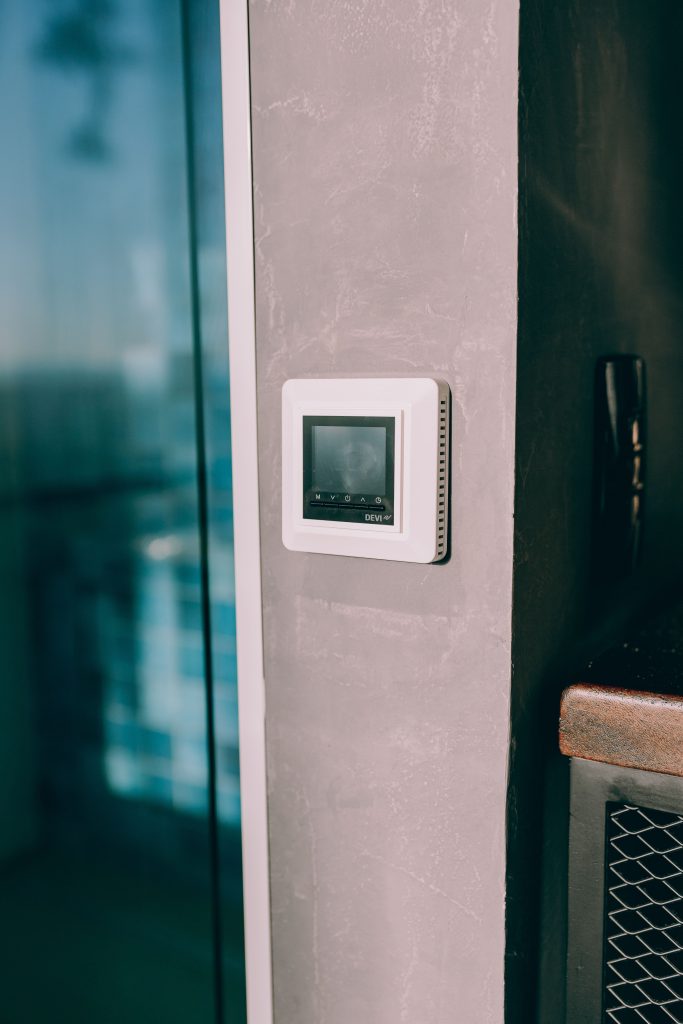
Heating and cooling eat up roughly half of the average home’s energy bill. A smart thermostat is one of the few smart home upgrades with a genuinely measurable payback, not just convenience.
What It Is
Smart thermostats replace your existing wall thermostat and add scheduling, remote control, and often occupancy sensing. Energy monitors are separate devices (or smart plugs) that track how much power specific appliances are drawing, so you can spot what’s actually costing you money.
Why You Need It
ENERGY STAR data shows certified smart thermostats cut heating and cooling costs by roughly 8%, which works out to $50–$150 a year for most households. Unlike old programmable thermostats that people rarely bothered to actually program, smart models remove the human error by learning your patterns or reacting to whether anyone’s home.
Key Features to Look For
- ENERGY STAR certification, the one credential backed by independent verification, not just a marketing claim
- C-wire compatibility, check this before buying; it’s the single biggest reason installs fail in older homes
- Room sensors, measure temperature where you actually spend time, not just near the thermostat itself
- HVAC compatibility, confirm support for your system type (central forced air, heat pump, baseboard, radiant)
- Utility rebates, many energy providers offer rebates on ENERGY STAR certified models, worth checking before you buy
Top Recommendations (2026)
| Pick | Device | Best For | Typical Price |
|---|---|---|---|
| Budget Pick | Amazon Smart Thermostat | Reliable ENERGY STAR savings without the premium price; works with 2-wire systems | ~$80 |
| Best Overall | ecobee Smart Thermostat Premium | Occupancy sensing, built-in air quality monitor, works with every major ecosystem | ~$250 |
| Premium Pick | Google Nest Learning Thermostat (4th Gen) | The most hands-off option, learns your schedule automatically over time | ~$280 |
For energy monitoring specifically, smart plugs that report real-time power draw are a cheap way to find out which appliances are quietly costing you the most, before spending on a whole-home solution. Curious what a smart thermostat could save you? Try our savings calculator.
Installation Difficulty
Moderate. Most smart thermostats are a DIY job (20–30 minutes), but they do involve working with low-voltage wiring behind your existing thermostat. If your home doesn’t have a C-wire, budget extra time or a small adapter kit, or consider a 2-wire compatible model like the Amazon Smart Thermostat.
Also worth reading: whether an air purifier is worth it for smoke season, and what independent testers actually found when they tried misting fans as a cooling alternative.
Last Updated: August 2026
Guides and fixes in this topic
- How Much Does It Cost to Run a Dehumidifier? (Per Hour, Month and Season)
- How Much Does It Cost to Run a Window Air Conditioner? (Per Hour and Per Month)
- Portable AC vs. Window AC vs. Mini-Split: What Each One Actually Costs to Run
- How Many BTUs Do You Actually Need? The Real AC Sizing Chart (Not Just Square Footage)
- Are Smart Thermostats Worth It in a Small Apartment? The Real Math (Not the Marketing)
- Will a Smart Thermostat Work If the Wi-Fi Goes Down? (Nest, Ecobee, and Honeywell)
- What Does a Space Heater Cost to Run 8 Hours a Night? (At 16 vs 30 Cents per kWh)
- Is Induction Actually Worth It? The Real Energy Savings, by State
- Why Your Portable AC Shuts Off After a Few Minutes (It’s Probably Not the Compressor)
- Do Misting Fans Actually Cool a Room? What Six Independent Tests Found
- Why Your Refrigerator Is Suddenly Costing You More to Run (And What Actually Fixes It)
Not sure where to begin? Start with the beginner’s guide or try a free calculator.