
Last updated November 11, 2026. Reviewed by the HomePilot editorial team.
The basement smells a little damp, someone in the house keeps sneezing, and the store shelf has two boxes that both promise “cleaner, healthier air.” One is a dehumidifier. One is an air purifier. They look similar, they cost about the same, and they solve completely different problems.
By the HomePilot Team · Updated October 31, 2026 · Checked against EPA and ENERGY STAR guidance · How we research
Short answer: a dehumidifier removes water from the air. It fixes dampness, musty smells, condensation and the conditions mold and dust mites need. An air purifier removes particles such as dust, pollen, pet dander and smoke, and some models trap odors with carbon, but it does not change humidity at all. Buy a dehumidifier if your home feels damp or reads above 50 to 60 percent humidity. Buy an air purifier for allergies, pets or smoke. Some homes need both.
Key takeaways
- Dehumidifier = moisture control. Air purifier = particle control.
- An air purifier will not fix mold. The EPA says the moisture problem has to be fixed first.
- Size a dehumidifier in pints per day; size an air purifier by its CADR for the room.
- A dehumidifier uses far more electricity than a typical air purifier, but usually runs fewer hours.
What a dehumidifier does
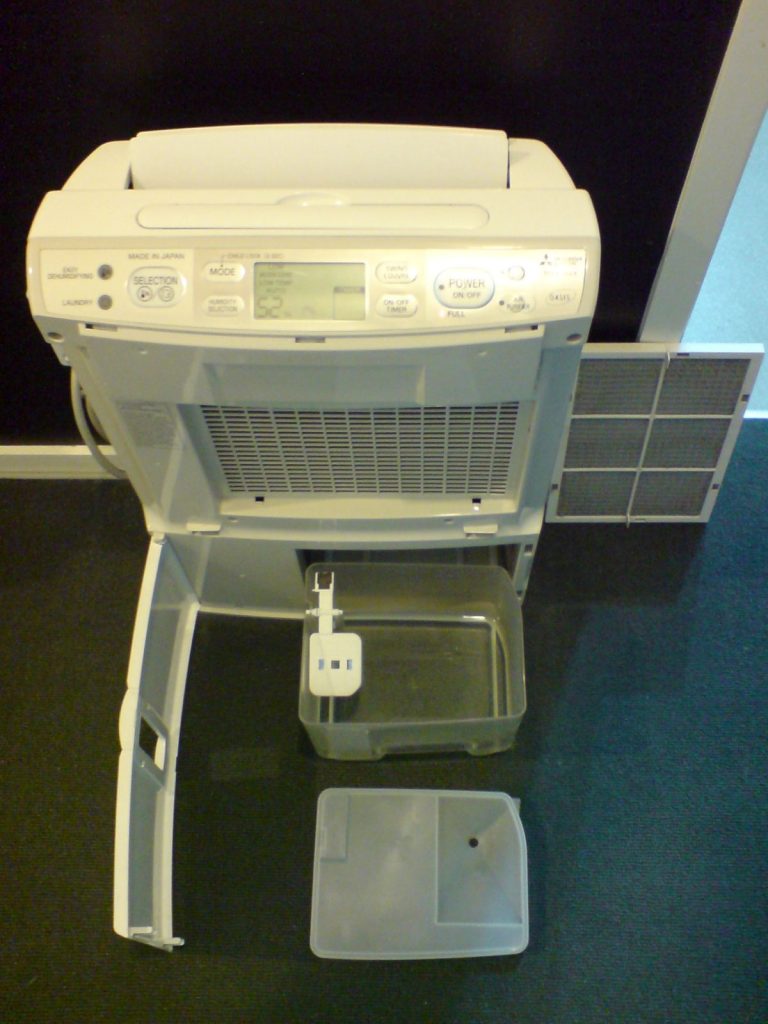
A home dehumidifier works like a small air conditioner. A fan pulls room air over a cold coil, water vapor condenses into droplets, and the water drips into a tank or out through a drain hose. The air is then warmed slightly and blown back into the room, drier than before.
Capacity is rated in pints of water removed per day. A built-in humidistat lets you set a target, and most people get the best balance of comfort and running cost at 45 to 50 percent. Keeping humidity there matters, because the EPA recommends indoor humidity below 60 percent, ideally 30 to 50 percent, to limit mold growth.
What an air purifier does
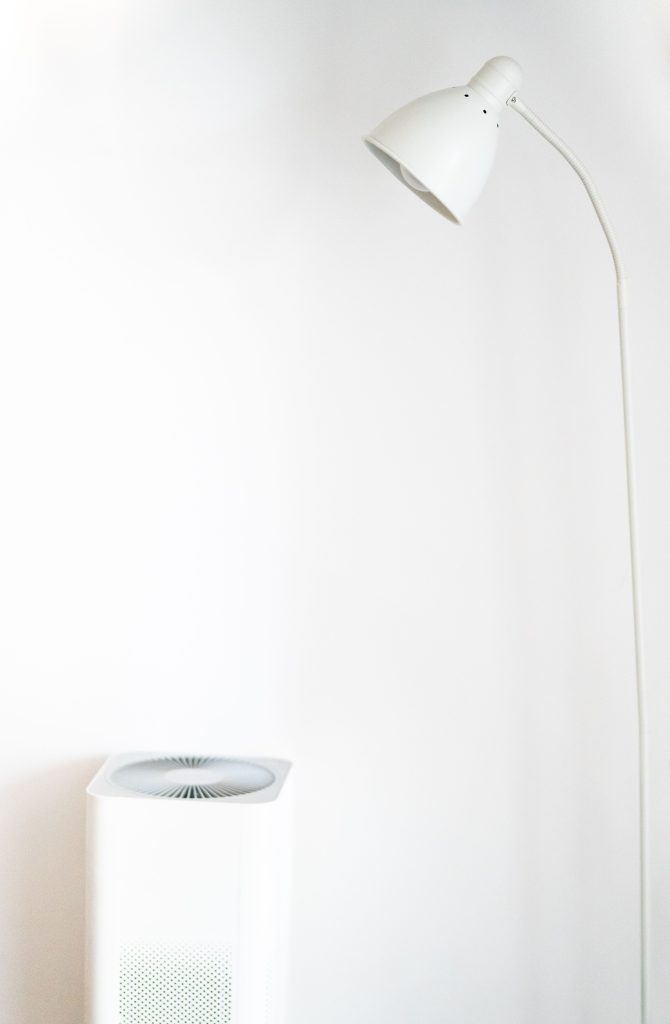
An air purifier, also called a portable air cleaner, pulls air through a filter and pushes cleaner air back out. Most good ones use a HEPA filter, which captures fine particles. Some add an activated carbon filter to absorb gases and odors.
Performance is rated by the clean air delivery rate (CADR). The EPA’s guide to air cleaners advises choosing a CADR large enough for the room and notes that CADR measures particle removal only, not gases. The EPA also stresses that air cleaners do not remove all pollutants, and the best first steps are removing the source and ventilating.
Dehumidifier vs air purifier at a glance
| Dehumidifier | Air purifier | |
|---|---|---|
| Removes | Water vapor (humidity) | Particles; odors and gases if it has carbon |
| Best for | Damp basements, musty smells, condensation, mold prevention | Allergies, pet dander, dust, wildfire smoke |
| Does not do | Filter dust, pollen or smoke | Lower humidity or stop mold growing |
| Rated by | Pints per day | CADR (clean air delivery rate) |
| Typical power draw | Roughly 250 to 700 watts while running | Roughly 20 to 100 watts, depending on speed |
| Maintenance | Empty the tank or use a drain; rinse the filter | Replace HEPA and carbon filters, usually every 6 to 12 months |
| Noise | Moderate; the compressor hums | Quiet on low, louder on high |
Which one do you need? Match it to your problem
| Your problem | Better choice | Why |
|---|---|---|
| Musty smell, especially after rain | Dehumidifier | The smell comes from mold fed by moisture. See why houses smell musty after rain |
| Foggy or dripping windows | Dehumidifier | Condensation is too much water vapor. See condensation on windows |
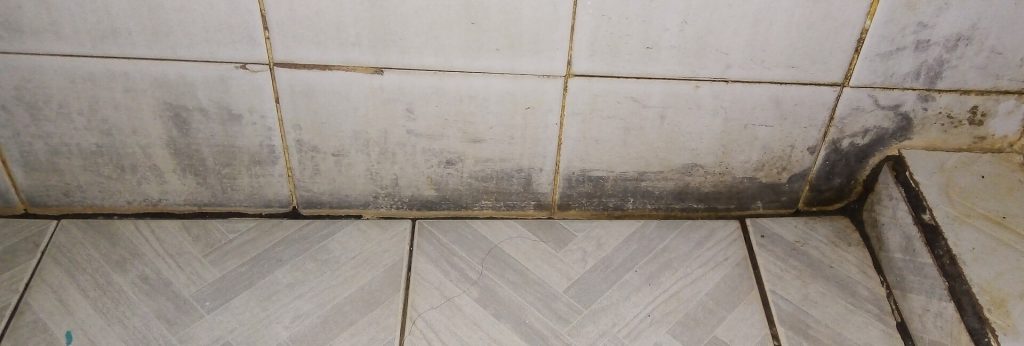
| Visible mold spots | Dehumidifier, plus fixing the leak | Air purifiers can catch some spores but do not stop growth |
| Pollen or seasonal allergies | Air purifier | HEPA filters capture pollen particles |
| Pet dander | Air purifier | Dander is a particle a HEPA filter traps |
| Dust mite allergy | Dehumidifier first | Dust mites need humid air. The EPA notes most portable air cleaners do not move enough air to remove heavier dust mite allergens from typical rooms |
| Wildfire or cooking smoke | Air purifier | Fine smoke particles need a high-CADR HEPA unit |
| Clammy, sticky feeling in summer | Dehumidifier or AC | Lower humidity feels cooler at the same temperature |
Can one machine do both?
Some products combine dehumidifying with a basic air filter, and some purifiers claim to help with humidity. In practice, combination units usually do one job well and the other lightly. A dehumidifier’s filter is there to protect its coil, not to clean the air for allergies. If you have a real moisture problem and a real allergy problem, two dedicated machines almost always do better.
Using both together
- Put the dehumidifier where the moisture is: the basement, a laundry room or a damp bedroom.
- Put the air purifier where people spend the most time, often the bedroom.
- Keep both a foot or more from walls and furniture so air can flow freely.
- Set the dehumidifier to 45 to 50 percent rather than its lowest setting. Going lower wastes electricity without much extra benefit.
How to choose a good one
Dehumidifier checklist
- Right capacity. Size by square footage and how damp the space is, not by tank size. Our sizing guide has the chart.
- ENERGY STAR certified. Certified models remove more water per kWh, which matters for a machine that may run for hours a day.
- Continuous drain or built-in pump. Without one, a busy basement unit can fill its tank in a day and switch off.
- Auto-restart after power cuts, so it keeps working after a storm knocks the power out.
- Low-temperature operation if it is going in a cool basement, so the coil does not ice up.
Air purifier checklist
- True HEPA filter, not “HEPA-type” or “HEPA-like”.
- CADR that matches the room. A common rule of thumb is a smoke CADR of at least two-thirds of the room’s floor area in square feet, so about 100 for a 150 sq ft bedroom.
- Activated carbon if odors matter to you, with a decent amount of carbon rather than a thin sheet.
- Filter cost. Check the price of replacement filters before you buy; over a few years they can cost more than the machine.
- No ozone. Skip devices sold as ozone generators. The EPA notes ozone is a lung irritant.
What each one costs to run
At an example electricity rate of 17 cents per kWh, a dehumidifier drawing 500 watts for 8 hours a day uses 4 kWh, about $0.68 a day or roughly $20 a month. An air purifier drawing 40 watts around the clock uses about 1 kWh, about $0.16 a day or roughly $5 a month. Your numbers depend on the model, the humidity and your rate.
For model-by-model numbers, see how much a dehumidifier costs to run, or plug your own wattage into the Appliance Running Cost Calculator.
Products mentioned in this article
- ENERGY STAR dehumidifiers – for damp rooms and basements
- True HEPA air purifiers – for dust, pollen, pet dander and smoke
As an Amazon Associate, HomePilot earns from qualifying purchases. Check the listing for current price and compatibility with your home.
Shopping for one? HomePilot Picks gathers the home gear we have researched, so you can compare options side by side before you spend a dollar.
Frequently asked questions
Is a dehumidifier or air purifier better for mold?
A dehumidifier. Mold needs moisture, and keeping humidity below 50 to 60 percent stops it from growing. The EPA notes an air purifier may catch some airborne spores but will not fix a mold problem.
Is a dehumidifier or air purifier better for allergies?
For pollen, pet dander and dust, an air purifier with a HEPA filter. For dust mite allergies, lowering humidity with a dehumidifier usually helps more, because dust mites need humid air to thrive.
Can I run a dehumidifier and air purifier in the same room?
Yes. They do different jobs and do not interfere with each other. Give each one space so air can flow in and out.
Does an air purifier lower humidity?
No. An air purifier only filters the air passing through it. It does not remove water vapor, so the humidity reading stays the same.
Do I need a dehumidifier in winter?
Usually not upstairs, since heated winter air is often dry. Basements and crawl spaces can stay damp all year, so a basement unit may still be useful.