
A burst pipe can do more damage overnight than a whole winter of heating bills. University of Illinois Extension notes that an eighth-of-an-inch crack can release up to 250 gallons of water a day. Enter tonight’s low, where the pipe runs and your thermostat setting, and this checker tells you how at risk that pipe is and exactly what to do before bed.
At what temperature do pipes freeze?
Water freezes at 32°F (0°C), but pipes inside a house are warmed by the home around them, so they usually hold out until it gets colder outside. Texas A&M AgriLife Extension warns that water pipes can freeze and burst when the outside temperature reaches 20°F (-7°C) or below. Insurers State Farm and the Institute for Business and Home Safety, quoted by Insurance Journal, give the same 20°F mark for homes with little or no insulation around their pipes.
| Where the pipe runs | When to worry |
|---|---|
| Outdoors: hose faucets, sprinkler and pool lines | Any night at or below 32°F (0°C) |
| Garages, crawl spaces, attics, unheated basements | Watch below freezing; high risk at 20°F (-7°C) or below |
| Outside walls and sinks on outside walls | Watch below freezing; high risk at 20°F (-7°C) or below |
| Inside heated rooms | Low while the heat stays at 55°F (13°C) or higher |
Wind, drafts through cracks in the foundation, and how many hours the cold lasts all make a difference, which is why the checker uses risk levels rather than a single cut-off.
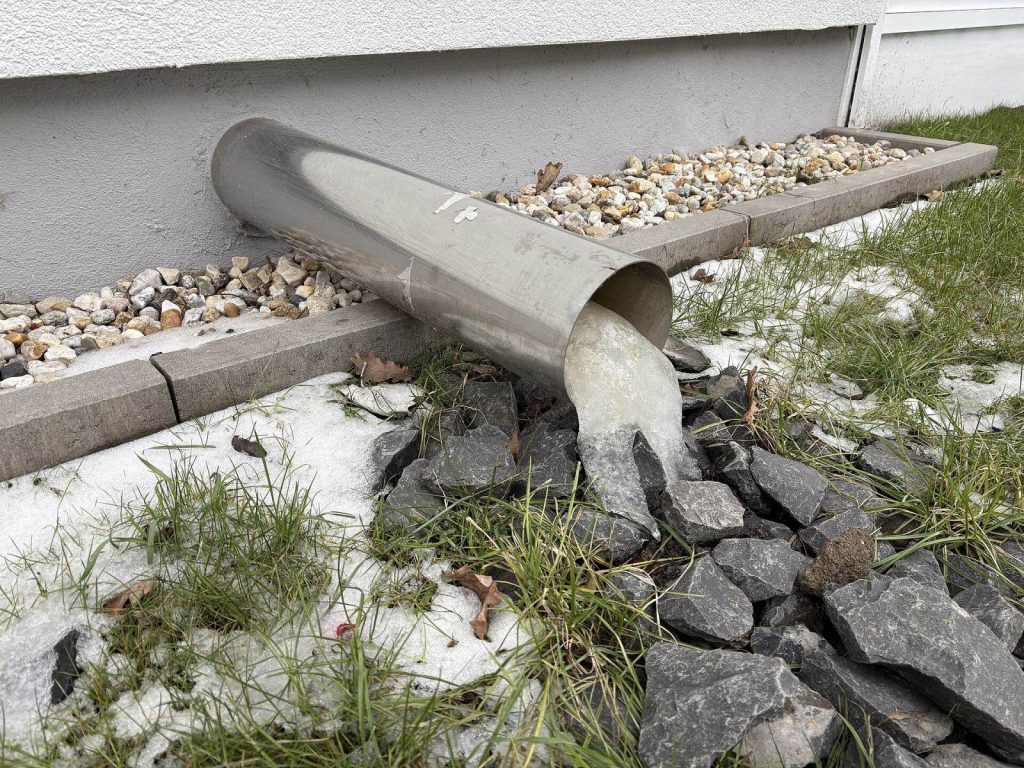
How to keep pipes from freezing
- Keep the heat steady. Texas A&M AgriLife advises keeping the thermostat at the same temperature day and night, and no lower than 55°F when you are away.
- Open cabinet doors in kitchens and bathrooms so warm air reaches pipes under sinks.
- Let a little water run at faucets on vulnerable pipes, hot and cold, when a severe freeze is forecast, as the insurers quoted by Insurance Journal recommend.
- Insulate and seal. Wrap exposed pipes with foam sleeves and seal foundation cracks that let cold air into crawl spaces.
- Disconnect garden hoses before the first hard freeze.
Our full guide on how to prevent frozen pipes covers each step, and how to stay warm in a power outage helps when the heat goes off.
Frequently asked questions
How do I know if a pipe is frozen?
The most common sign is a faucet that gives only a trickle or nothing at all on a very cold morning. Keep that faucet open while you warm the pipe; Texas A&M AgriLife advises keeping the faucet open while treating a suspected frozen pipe.
Does pipe insulation stop freezing?
It slows freezing rather than stopping it. Insulation buys time on a cold night, which is why the checker still shows a high risk for insulated pipes in unheated spaces when it gets very cold.
What should I do if a pipe bursts?
Turn off the main water shutoff valve right away, then call a plumber. Find that valve now, before you need it.
More winter tools: the window condensation and humidity calculator and the heating cost calculator, plus everything on the Tools page.
Sources: Texas A&M AgriLife Extension, “Winter Storms: Frozen Pipes”; Insurance Journal, “Frozen Pipes Cause Billions in Damage, but Can Be Prevented” (State Farm and IBHS); University of Illinois Extension, “Cold weather, frozen pipes.” A general guide, not a guarantee. Last updated: November 2026.