

Last updated November 20, 2026. Reviewed by the HomePilot editorial team.
Buying guide · Home backup power
When the power goes out in a winter storm, the questions come fast. How long will the food last? Will the router stay on so you can work? Can the CPAP machine run tonight? A portable power station answers most of them quietly: it is a big rechargeable battery with outlets, safe to run indoors, with no fuel and no fumes. Searches for them have climbed steadily, and the choice has never been bigger. Here is how to pick the right size, and the models that stand out for home backup in 2026.
By the HomePilot Team · Updated November 4, 2026 · Based on published 2026 reviews and maker specifications · How we research
As an Amazon Associate, HomePilot earns from qualifying purchases. Links go to Amazon search results so you can compare current sellers and prices.
Our picks at a glance
Best for most homes
Jackery Explorer 1000 v2
About 1 kWh of LiFePO4 battery in a 24-pound box.
Fastest recharge
Anker SOLIX C1000 Gen 2
Refills in under an hour from the wall.
Best whole-home backup
EcoFlow DELTA Pro 3
About 4 kWh, expandable, for serious outages.
Best small budget pick
Jackery Explorer 300 Plus
Phones, router and a CPAP through short outages.
Short answer
For most homes, a power station with about 1,000 watt-hours (Wh) of battery and at least 1,500 watts of output, such as the Jackery Explorer 1000 v2 or Anker SOLIX C1000 Gen 2, keeps a fridge, router, lights and phones going through a typical outage. For multi-day outages or running bigger appliances, step up to a 4,000 Wh unit like the EcoFlow DELTA Pro 3. Choose LiFePO4 batteries for a longer life, and a model with fast UPS switching if you want it to take over automatically.
How to size a power station (the 2-minute math)
Two numbers matter. Watt-hours (Wh) is how much energy the battery holds, which decides how long things run. Watts (W) of output is how much it can power at once, which decides what you can plug in.
The 0.85 allows for losses in the inverter.
| What you want to run | Approximate draw | On a 1,000 Wh station |
|---|---|---|
| Wi-Fi router and modem | About 15 to 20 W | Roughly 2 days |
| Phone charging | About 10 W while charging | Dozens of full charges |
| Laptop | About 50 W | Around 17 hours |
| Newer refrigerator | Averages about 50 W over a day (1.2 kWh/day) | Around 17 hours |
| Older refrigerator | Averages about 110 W (2.7 kWh/day) | Around 8 hours |
| Space heater | 1,500 W | Under 40 minutes: not practical |
These are estimates using typical wattages; check the labels on your own devices, or plug their watts into our Appliance Running Cost Calculator. Heating is the one thing batteries do poorly, so plan on blankets, not heaters, during an outage.
Who this guide is for
- You want backup for outages without the noise, fuel and carbon monoxide risk of a gas generator.
- You rent or live in an apartment where a generator is not an option.
- You need reliable power for a CPAP, a home office or a fridge full of food.
How we picked
We did the research so you do not have to. We compared 2026 testing and recommendations from OutdoorGearLab, TechRadar and The Gadgeteer, along with maker specifications, and focused on what matters at home: usable capacity, enough output for a fridge, LiFePO4 battery chemistry, fast recharging and automatic switchover. We do not run our own lab tests, so specs below are the makers’ claims.
Best for most homes
1. Jackery Explorer 1000 v2
About 1,070 Wh of LiFePO4 battery with 1,500 W of output, a one-hour emergency charge mode and a weight of about 24 pounds, according to Jackery. That is enough to keep a fridge, router and lights going through most overnight outages, and light enough to carry upstairs.
Why we like it
- Strong balance of capacity, output and weight
- LiFePO4 battery rated for thousands of charge cycles
- Fast emergency charging from the wall
Flaws but not dealbreakers
- 1,500 W output will not run big appliances
- Not expandable with extra batteries
Fastest recharge
2. Anker SOLIX C1000 Gen 2
Anker lists 1,024 Wh of LiFePO4 capacity, 2,000 W of output (3,000 W peak) and a full recharge in about 49 minutes. OutdoorGearLab named the SOLIX C1000 line its best power station for most people.
Why we like it
- Very fast recharge between outages
- 2,000 W output handles more appliances at once
- Plenty of outlets
Flaws but not dealbreakers
- Heavier than the Jackery
- Not expandable

Best value output
3. BLUETTI AC180
About 1,152 Wh of LiFePO4 battery and 1,800 W of output. A popular middle ground for people who want a little more inverter headroom than a 1,500 W unit offers.
Why we like it
- More output than many 1 kWh rivals
- LiFePO4 battery
Flaws but not dealbreakers
- App and display are less polished than some rivals
- Heavier than the smallest 1 kWh units
Best whole-home backup
4. EcoFlow DELTA Pro 3
A big step up: about 4,096 Wh and 4,000 W of output, with fast UPS switchover and expandable batteries. OutdoorGearLab rated it best for home backup, and The Gadgeteer reports Popular Mechanics named it its best whole-home backup pick. It is on wheels for a reason; this is not a grab-and-go unit.
Why we like it
- Can run large appliances and power a home for days with extra batteries
- Fast automatic switchover
- Can connect to home circuits with the right accessories
Flaws but not dealbreakers
- Expensive
- Heavy; needs a permanent spot
- Home circuit connection needs an electrician

Best small budget pick
5. Jackery Explorer 300 Plus
A compact unit of about 300 watt-hours that The Gadgeteer reports Popular Mechanics named a best-value pick. It will not run a fridge, but it keeps phones, a router, lights and many CPAP machines going through short outages.
Why we like it
- Light and affordable
- Good starter backup for essentials
Flaws but not dealbreakers
- Too small for a fridge
- Short runtime on anything power-hungry
Compare the picks
| Model | Capacity (maker spec) | Output | Best for |
|---|---|---|---|
| Jackery Explorer 1000 v2 | About 1,070 Wh | 1,500 W | Most homes |
| Anker SOLIX C1000 Gen 2 | 1,024 Wh | 2,000 W | Fast recharge |
| BLUETTI AC180 | About 1,152 Wh | 1,800 W | More output per dollar |
| EcoFlow DELTA Pro 3 | About 4,096 Wh | 4,000 W | Whole-home, multi-day |
| Jackery Explorer 300 Plus | About 300 Wh | Small | Phones, router, CPAP |
What to look for
- LiFePO4 battery chemistry. Lasts far more charge cycles than older lithium-ion types and is considered more stable.
- UPS or pass-through switching. Lets the station sit plugged in and take over within milliseconds when the grid drops, so routers and computers do not reboot.
- Enough output for your biggest device. Fridges briefly draw much more when the compressor starts.
- Recharge options. Wall, car and solar input matter if the outage runs long.
- Weight. A 1 kWh unit weighs around 24 to 30 pounds; larger units need wheels.
Get the most from your power station in an outage
- Keep it charged; top it up every few months.
- Plug the fridge in, then open its door as little as possible.
- Run the router and charge phones and laptops first; they use very little.
- Skip space heaters and electric cooking; they drain batteries fast.
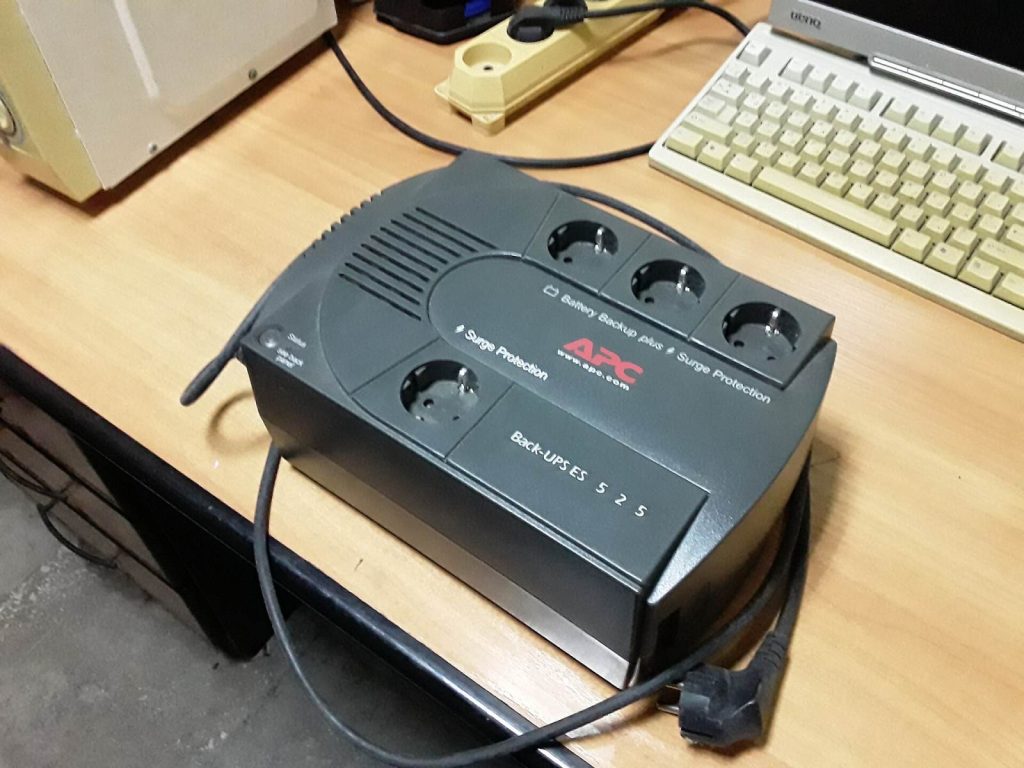
- Pair it with a small UPS for the router if you want zero interruption. See why devices go offline after outages.
Still deciding between a battery and a gas generator? Read generator vs power station vs standby generator.
Frequently asked questions
What size portable power station do I need for home backup?
For a fridge, router, lights and phones through a typical outage, about 1,000 Wh with 1,500 W or more of output. For multi-day outages or bigger appliances, look at 2,000 to 4,000 Wh or expandable units.
How long will a power station run a refrigerator?
Roughly: battery Wh times 0.85, divided by the fridge’s average watts. A newer fridge averaging about 50 W could run around 17 hours on a 1,000 Wh station; an older one closer to 8 hours.
Can I use a portable power station indoors?
Yes. Unlike gas generators, battery power stations produce no fumes or carbon monoxide, so they are safe to use inside.
What is LiFePO4 and why does it matter?
Lithium iron phosphate is a battery chemistry that lasts many more charge cycles than older lithium-ion types and is considered more stable, which matters for a device you keep for years.
Can a power station run a space heater?
Only briefly. A 1,500 W heater would drain a 1,000 Wh station in well under an hour. Use blankets and close off rooms instead.

