

Last updated November 24, 2026. Reviewed by the HomePilot editorial team.
There is always one room. The back bedroom, the basement office, the patio where the phone drops to one bar and videos never finish loading. A Wi-Fi extender promises to fix it for the price of a takeout dinner. Sometimes it does exactly that. Sometimes it gives you full bars and half the speed. Knowing which one you will get comes down to how extenders actually work.
By the HomePilot Team · Updated November 1, 2026 · Checked against networking guides and manufacturer specs · How we research
Short answer: yes, Wi-Fi extenders work for filling one dead zone, especially for browsing, smart home gadgets and HD streaming. But a basic single-band extender has to talk to your router and your devices on the same radio, which can cut speed through it roughly in half. Place it halfway between the router and the dead zone, where it still gets a strong signal. For several weak rooms or a large home, a mesh system or a wired access point works better.
Key takeaways
- An extender spreads your existing signal; it cannot make your internet plan faster.
- Single-band extenders can roughly halve throughput for devices connected to them.
- Dual-band models with a dedicated link to the router lose much less speed.
- Placement is everything: halfway, with a strong signal from the router.
How a Wi-Fi extender works
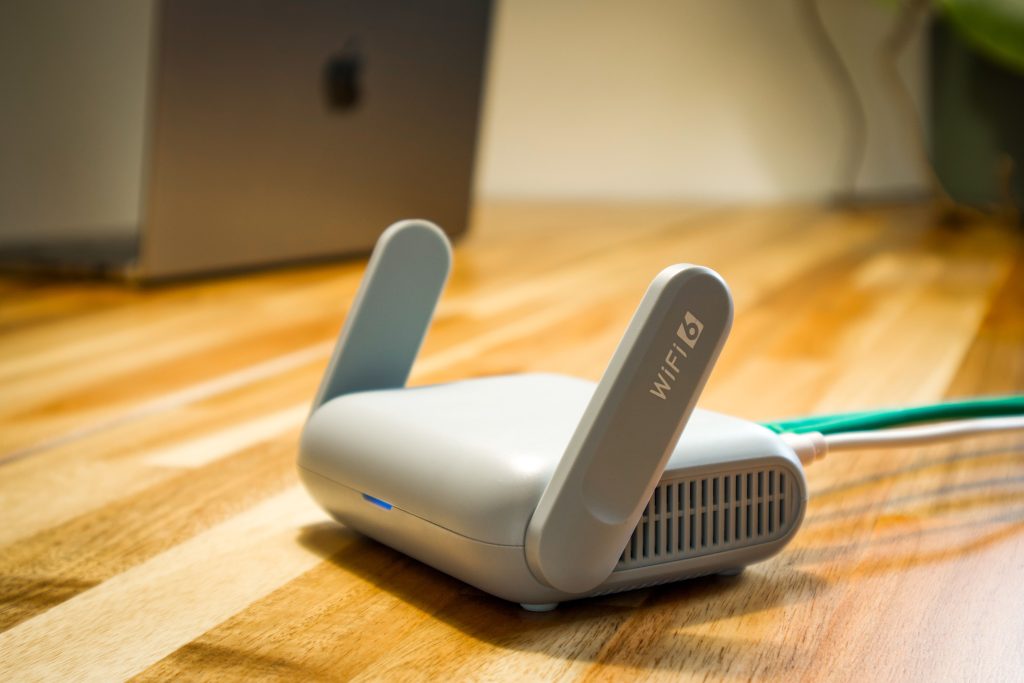
An extender, also called a repeater or booster, listens to your router’s Wi-Fi signal and rebroadcasts it into the area the router cannot reach. Think of a person standing in a hallway, catching messages from the living room and passing them to the bedroom.
The problem is that a basic extender can only talk or listen on its radio at one moment. It has to receive data from the router, then turn around and send it to your device, on the same channel. That relay roughly halves the available bandwidth. A connection that measures about 200 Mbps at the router might give about 100 Mbps through a single-band extender, and less if the extender itself is in a weak spot.
Dual-band and tri-band extenders reduce the penalty by using one band to talk to the router and another to talk to your devices. Be aware that some dual-band models only do this when set up that way, so check the settings for a dedicated backhaul or uplink option.

When an extender is a good fix, and when it is not
| Situation | Extender a good fit? | Better option |
|---|---|---|
| One weak room in a small to medium home | Yes | Not needed |
| Browsing, email, music, HD video in the dead zone | Yes | Not needed |
| A smart plug, camera or sensor at the edge of coverage | Yes | Not needed |
| 4K streaming, gaming or big video calls in the dead zone | Only a good dual-band model | Mesh or wired access point |
| Several weak rooms or multiple floors | No | Mesh Wi-Fi system |
| Thick walls, brick or concrete | Often no | Wired backhaul, MoCA or powerline |
| The whole house is slow, not just one room | No | Check your internet plan and router first |
Extender vs mesh vs powerline vs wired
| Option | How it works | Speed | Best for |
|---|---|---|---|
| Wi-Fi extender | Repeats the router signal wirelessly | Reduced, especially single-band | One dead zone, light use |
| Mesh system | Several units work as one network with automatic hand-off | Good; best with a dedicated backhaul | Whole-home coverage |
| Powerline adapter | Sends data over your home electrical wiring | Varies with wiring quality | Rooms where Wi-Fi cannot reach |
| Wired access point | A second Wi-Fi point connected by Ethernet | Full speed | Best performance if you can run a cable |
If you are leaning toward mesh, our mesh Wi-Fi buying guide and eero model comparison walk through the choices.
Where to put a Wi-Fi extender
- Start halfway between the router and the dead zone, not in the dead zone itself.
- Check the signal light. Most extenders have an LED or app reading that shows how well they hear the router. If it is weak, move closer.
- Keep it in the open, away from metal, mirrors, fish tanks and large appliances.
- Raise it if you can. An outlet at counter height often works better than one behind a couch.
- Test the speed in the dead zone before and after with a speed test app, and try a couple of positions.
Setup tips that make a big difference
- Match the Wi-Fi standard. A Wi-Fi 5 extender on a Wi-Fi 6 router will hold back newer devices.
- Use the same network name if offered. Some extenders create a separate “_EXT” network; others let devices roam on one name.
- Update the extender’s firmware after setup.
- Turn on dedicated backhaul on dual-band models if the option exists.
- Use the Ethernet port on the extender to connect a TV or game console that sits nearby.
Common extender problems and quick fixes
| Problem | Likely cause | Fix |
|---|---|---|
| Connected, but no internet | The extender lost its link to the router | Restart both, then move the extender closer to the router |
| Full bars but slow speeds | Single-band relay or a weak router link | Move it closer, enable dedicated backhaul, or upgrade to dual-band |
| Phone stays on the weak router signal | The device does not switch networks on its own | Use the same network name with roaming, or switch manually |
| Smart devices drop off after setup | They joined the wrong network or band | Reconnect them to the extended 2.4 GHz network |
| Extender keeps rebooting | Overheating or old firmware | Give it open air and update the firmware |
If you have tried two or three spots and still get poor results, the extender is probably the wrong tool for that space. That is usually the moment to look at mesh or a wired option instead of a second extender.
Before you buy anything
A weak room is not always a coverage problem. Restart and update your router, move it to a central and raised spot, and check whether your internet plan is the real bottleneck. Our guide to Wi-Fi that keeps disconnecting covers the free fixes, and the Home Internet Speed Calculator shows how much speed your household really needs.
Extenders also draw a little power around the clock, much like a router. See what a router costs to run for the numbers.
Comparing extenders and mesh systems? HomePilot Picks gathers the networking gear we have researched.
Frequently asked questions
Do Wi-Fi extenders really work?
Yes, for filling a single dead zone. They work well for browsing, smart devices and HD streaming. Basic single-band models can cut speed through the extender roughly in half.
Do Wi-Fi extenders slow down your internet?
They do not slow down devices connected directly to the router. Devices connected through a single-band extender usually get less speed, because the extender relays data on the same radio. Dual-band models with a dedicated backhaul lose less.
Where is the best place to put a Wi-Fi extender?
About halfway between the router and the dead zone, in a spot where the extender still receives a strong signal from the router.
Is mesh Wi-Fi better than an extender?
For whole-home coverage, usually yes. Mesh units work together as one network and hand your devices off smoothly. For one weak room, an extender is cheaper and often enough.
Can I use an extender for smart home devices?
Yes. Smart plugs, cameras and sensors need little bandwidth, so an extender is a good way to reach gadgets at the edge of your coverage.

