

Last updated November 24, 2026. Reviewed by the HomePilot editorial team.
By the Numbers · Electrical
You plug in a space heater, the microwave clicks on, and the lights go out. Nothing is broken. The circuit just ran out of room. Every circuit in your home can carry a fixed amount of current, and every appliance on it draws some of that. When the total goes past the limit, the breaker trips to protect the wiring. The math is simple once you see it, and knowing it lets you plan which things can run together instead of walking to the panel in the dark. Here is how many watts a 15-amp or 20-amp circuit can really handle, the 80 percent rule that most people have never heard of, and worked examples with real appliances.
By the HomePilot Team · Updated November 24, 2026 · Based on guidance from Lasko and the International Association of Electrical Inspectors (IAEI) · How we research
12.5 A
Current drawn by a 1,500-watt space heater on high (Lasko)
15 A
Typical rating of a bedroom circuit breaker (Lasko)
80%
Share of a circuit you should plan to use for long-running loads (IAEI)
The short answer
Standard U.S. outlets deliver 120 volts, and watts equal volts times amps. A 15-amp circuit tops out at 1,800 watts and a 20-amp circuit at 2,400 watts. But electrical code treats anything that runs for three hours or more as a continuous load and limits it to 80 percent of the breaker rating, which is 1,440 watts on a 15-amp circuit and 1,920 watts on a 20-amp circuit. A single 1,500-watt heater already sits just above that line on an ordinary 15-amp circuit.
Do not want to do the math? Tap in what is running on one circuit, pick a 15 A or 20 A breaker, and the checker shows whether it will trip and what to move.
The formula in one line
Amps = watts ÷ 120 (on a standard U.S. outlet)
Example: 1,500 W ÷ 120 V = 12.5 amps
Find the wattage on the appliance label or nameplate. Add up everything on the same circuit, divide by 120 and compare the result with the breaker rating. The number printed on the breaker handle is the rating, not the shape of the outlet.
The circuit capacity chart
| Breaker | Absolute maximum (120 V) | 80% for loads running 3+ hours | One plug-in appliance, 80% limit |
|---|---|---|---|
| 15 amp | 1,800 watts (15 A) | 1,440 watts (12 A) | 12 A (1,440 W) |
| 20 amp | 2,400 watts (20 A) | 1,920 watts (16 A) | 16 A (1,920 W) |
The IAEI explains the reasoning: conductors are sized to handle the non-continuous loads plus 125 percent of continuous loads, which is the same as an 80 percent derating for loads that run for three hours or more without interruption. That is because a constant load makes wires heat up, while short bursts do not. The code also says a single plug-in appliance should not exceed 80 percent of the circuit rating, so no more than 12 amps on a 15-amp circuit and 16 amps on a 20-amp circuit.
Worked examples
These use common wattages. Check the labels on your own appliances, since ratings vary.
| What is running | Total watts | Amps at 120 V | 15 A circuit | 20 A circuit |
|---|---|---|---|---|
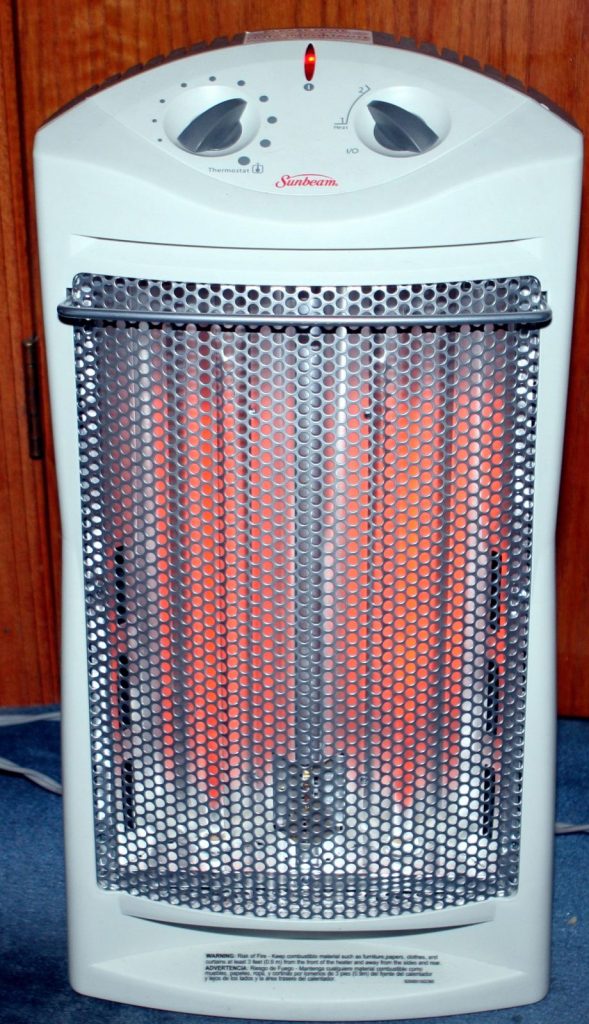
| 1,500 W space heater alone | 1,500 | 12.5 | Over the 12 A guideline; no room to spare | Fine |
| Heater + 150 W TV + a few lamps (about 250 W) | About 1,900 | About 15.8 | Trips, or very close | Fine (about 79% of 20 A) |
| Heater (1,500 W) + microwave (example 1,200 W) | 2,700 | 22.5 | Trips | Trips |
| Heater on low (draw cut by up to 60%) + TV | About 750 to 900 | About 6 to 7.5 | Fine | Fine |
| 1,500 W hair dryer alone | 1,500 | 12.5 | Over the 12 A single-appliance guideline | Fine |
Lasko notes that a bedroom is typically on a 15-amp circuit, that a 1,500-watt heater on high draws 12.5 amps, and that once a few lights or a television join it, the 15-amp limit is quickly reached and the breaker trips. Many space heaters also have a low setting that can cut the current draw by as much as 60 percent.
Why bathrooms and kitchens are different
The IAEI points out that a 1,500-watt hair dryer is a highly likely load in a bathroom, and at 12.5 amps it calls for a 20-amp circuit. Kitchens follow a similar logic: the code requires two or more 20-amp small-appliance circuits for the countertop outlets, which gives kitchen appliances more room than a typical bedroom circuit. The IAEI also notes that many homes pair 20-amp circuits with 15-amp receptacles, which limits a single plug-in appliance to 12 amps.
How to find out which breaker you have
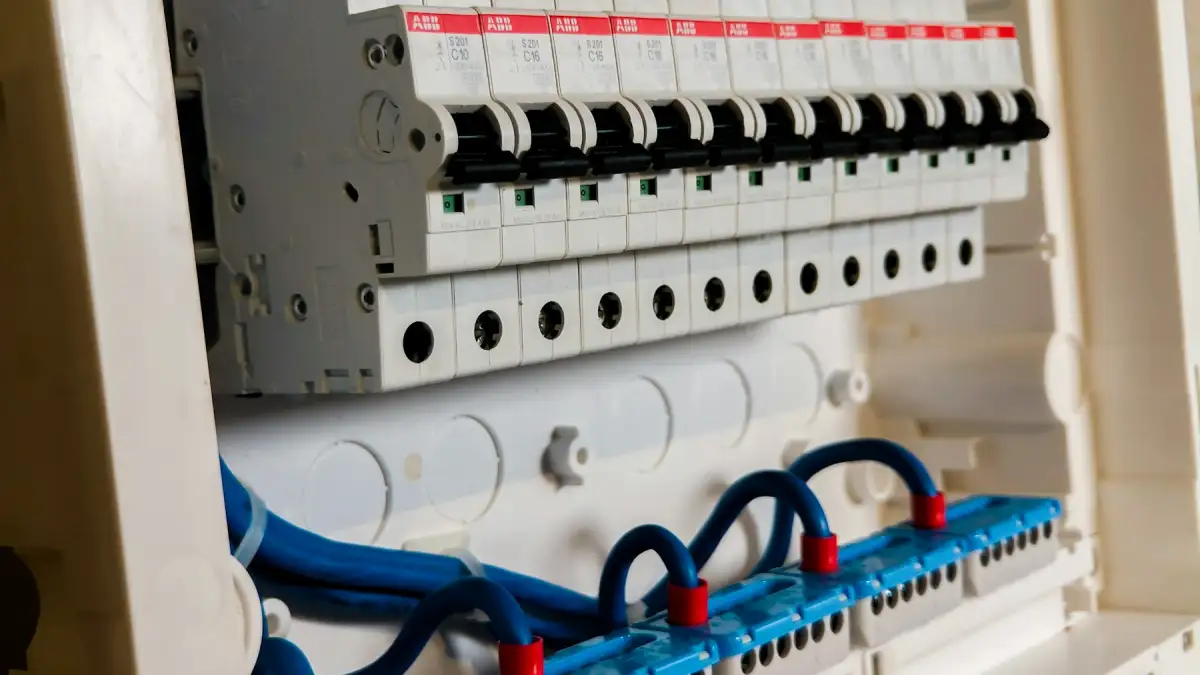
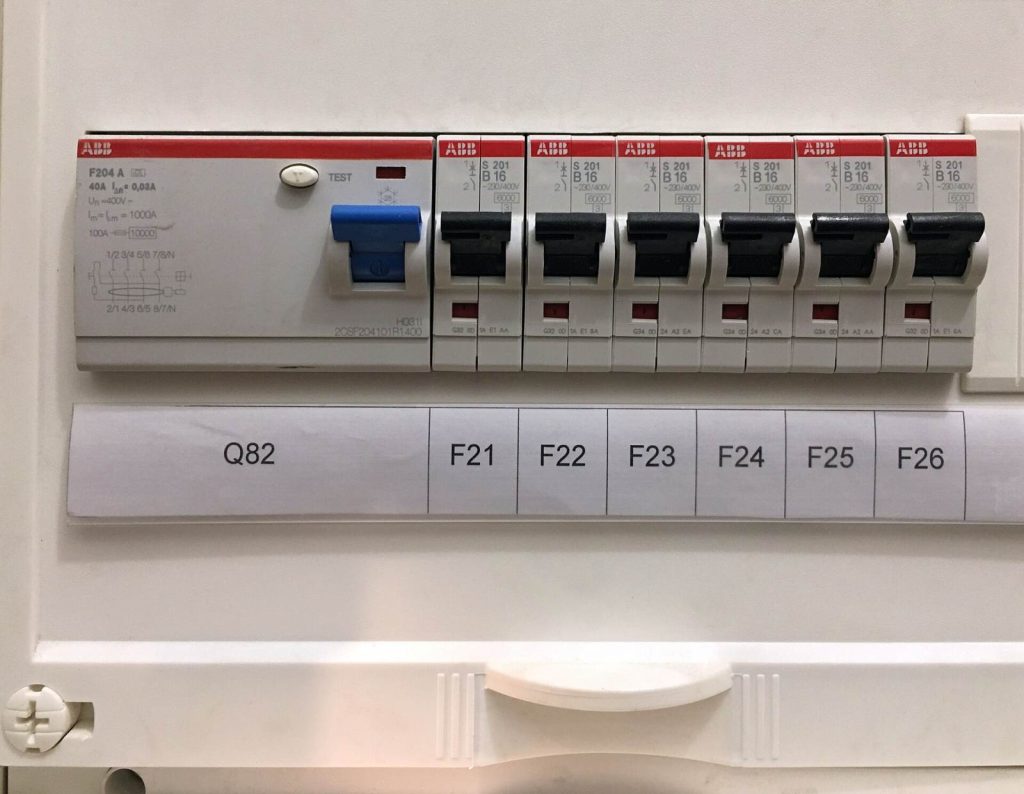
- Open the panel and read the number on each breaker handle: 15, 20 and so on.
- Find the circuit for the room. Turn off breakers one at a time and see which outlets and lights go dead, or follow any labels.
- Write it down. Label the panel for next time, with the amp rating and the rooms.
- List what runs on that circuit, including lights, chargers and the TV, and add their watts.
- Compare: total watts divided by 120, versus 80 percent of the breaker rating.
Shop plug-in watt meters on Amazon → · Shop outlet testers → (As an Amazon Associate, HomePilot earns from qualifying purchases.)
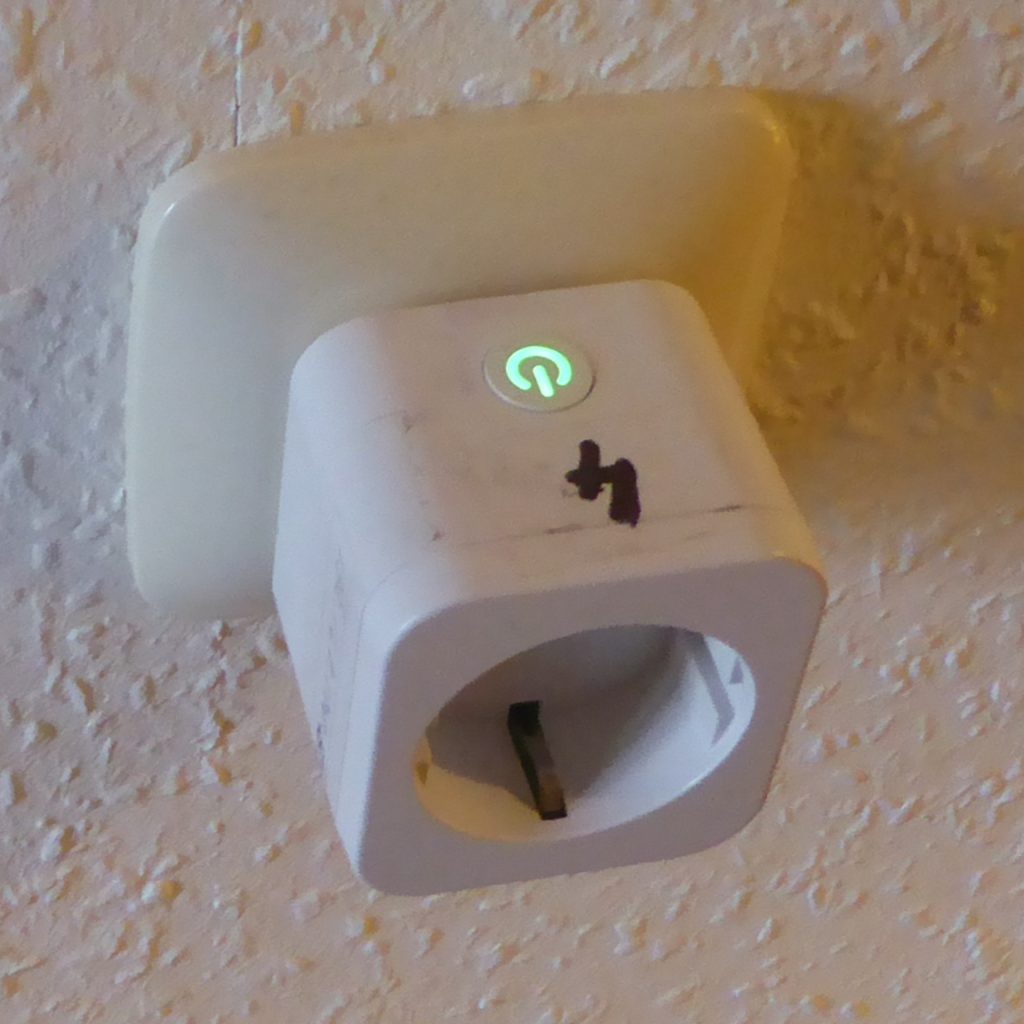
A plug-in meter shows exactly how many watts an appliance uses. You can also use a smart plug that tracks energy; see our guide to energy-monitoring smart plugs.
How to stop tripping the breaker
- Move the load. Plug the heater into an outlet on a different circuit, or one with nothing else on it.
- Use the low setting. A heater’s low setting can reduce its draw by up to 60 percent, according to Lasko.
- Run big appliances at different times. Do not run the microwave, kettle and toaster oven together.
- Unplug other things on the same circuit.
- Use a dedicated outlet. Lasko advises using a wall outlet on its own circuit for a space heater if you have one.
Do not make it worse
- Never replace a breaker with a larger one. Lasko says breakers and fuses should never be bypassed or replaced with a higher rating. The wiring is sized for the breaker.
- Do not use extension cords or power strips with space heaters. They are not designed for that current and can overheat.
- Plug heaters straight into a wall outlet and check the plug often. If it feels very hot, stop using it.
- Call an electrician if a breaker trips repeatedly with a light load, if outlets feel warm or smell burnt, or if the breaker will not reset.
If trips keep happening, our guide to why a circuit breaker keeps tripping covers the other common causes, and our GFCI troubleshooting guide covers outlets that cut out. If you are choosing a heater, see the space heater safety checklist and our best space heaters of 2026.
Frequently asked questions
How many watts can a 15-amp circuit handle?
A 15-amp circuit at 120 volts can carry up to 1,800 watts, but code limits loads that run for three hours or more to 80 percent, which is 1,440 watts.
How many watts can a 20-amp circuit handle?
Up to 2,400 watts at 120 volts, or 1,920 watts for loads that run three hours or more.
How many amps does a 1,500-watt space heater use?
12.5 amps on a standard 120-volt outlet, according to Lasko, which is most of a typical 15-amp bedroom circuit.
Can I run a space heater and a microwave on the same circuit?
Usually not. A 1,500-watt heater plus a typical microwave can total well over 2,400 watts, more than either a 15-amp or a 20-amp circuit can supply.
What is the 80 percent rule for circuits?
Electrical code treats loads that run for three hours or more as continuous and limits them to 80 percent of the circuit rating, because constant loads heat the wiring. Plug-in appliances are also limited to 80 percent of the circuit rating.

