
Last updated November 20, 2026. Reviewed by the HomePilot editorial team.
Your refrigerator is the only appliance in your home that works every minute of every day, and most of us never think about it until the milk goes sour. Yet a handful of everyday habits quietly make it run longer, wear out sooner and add to your electric bill. Most of them take five minutes to fix.
By the HomePilot Team · Updated October 31, 2026 · Checked against FDA, USDA and manufacturer guidance · How we research
Short answer: the most common refrigerator mistakes are trusting the dial instead of a thermometer, setting it colder than needed, never cleaning the condenser coils, pushing it tight against the wall, ignoring a worn door seal, and overpacking the shelves. The FDA’s targets are simple: 40°F or below in the fridge and 0°F in the freezer. And if your fridge seems to run nonstop, that may be completely normal, depending on the kind of compressor inside it.
Key takeaways
- The numbers on the dial are not degrees. A $5 appliance thermometer tells you the truth.
- Dusty coils, a leaky door seal and no room to breathe all make the compressor run longer.
- Many modern fridges are designed to run most of the time, and variable-speed models run almost constantly.
- In an outage, a closed fridge keeps food safe for about 4 hours; a full freezer for about 48.
Wondering if your fridge runs too much? Our free Fridge Run-Time Checker times the compressor with a stopwatch, tells you whether that is normal for your type of fridge, and estimates what any extra run time costs.
1. Trusting the dial instead of a thermometer
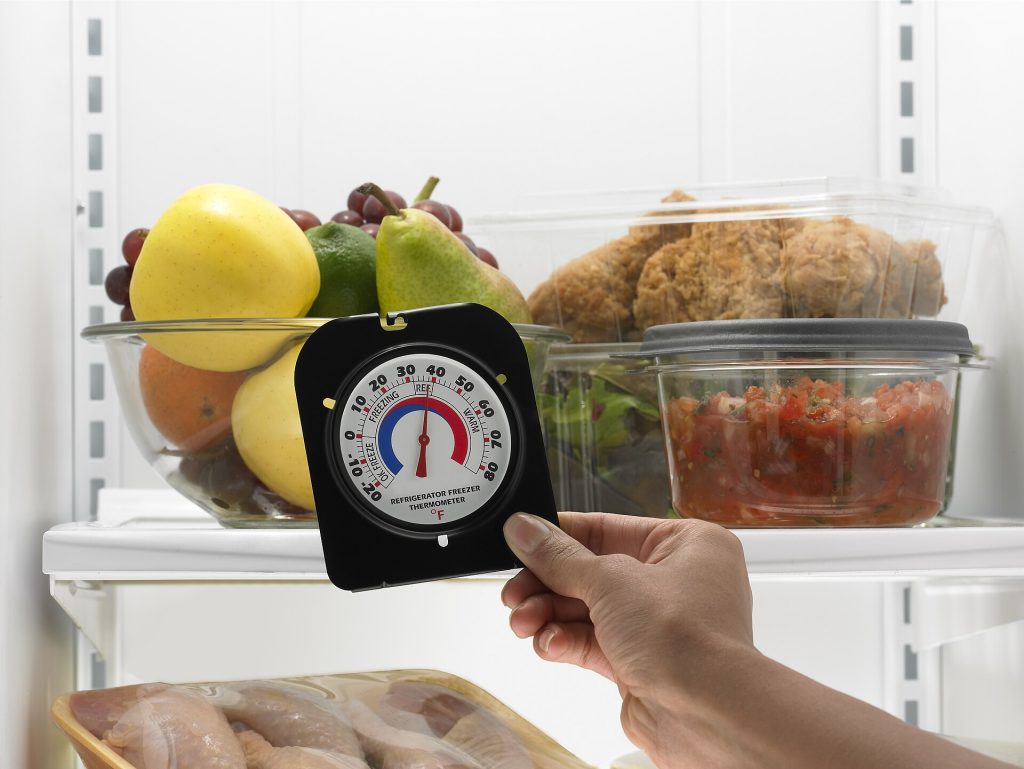
Those numbers from 1 to 5, or “colder” and “coldest”, are not temperatures. They are just settings, and the same number can mean very different things in two fridges. The FDA recommends keeping an appliance thermometer in the refrigerator and freezer so you know the actual temperature. Put it in a glass of water on the middle shelf for the most accurate reading of what your food experiences.
2. Setting it colder than it needs to be
| Compartment | FDA target | Why |
|---|---|---|
| Refrigerator | 40°F (4°C) or below | Slows the growth of most harmful bacteria |
| Freezer | 0°F (-18°C) | Keeps food safely frozen |
Aim for about 37 to 38°F in the fridge. That gives you a safety margin below 40°F without making the compressor work to reach a temperature you do not need. If the lettuce is freezing at the back, it is set too cold.
3. Never cleaning the condenser coils
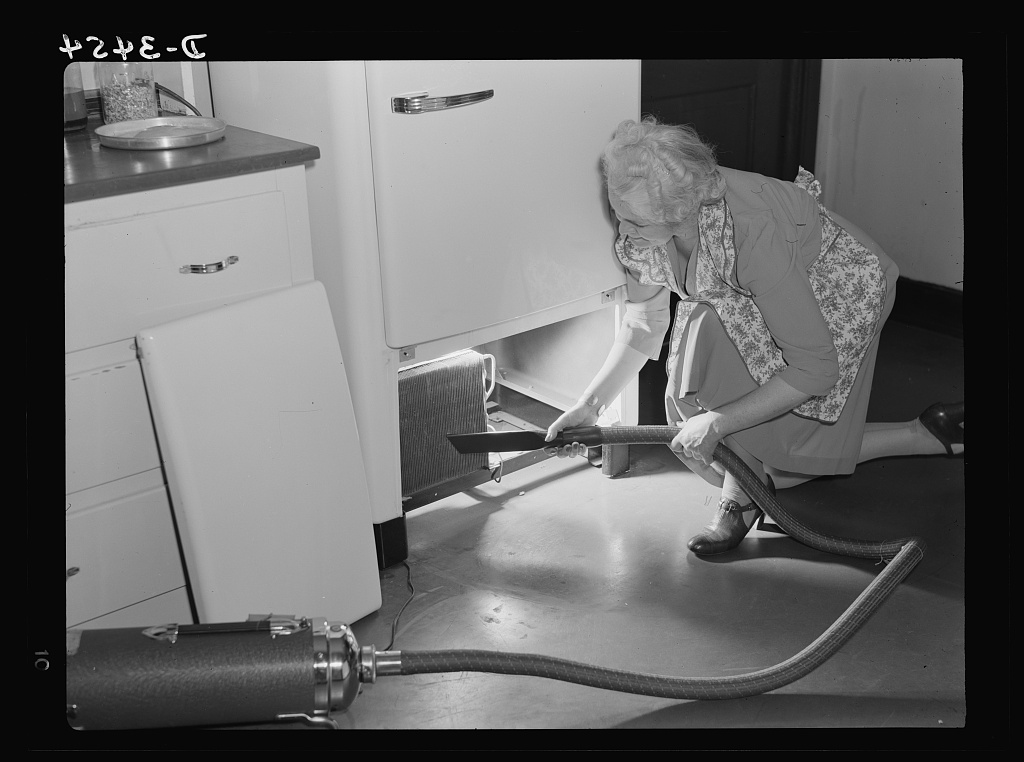
The coils, usually behind the bottom grille or on the back, release the heat the fridge pulls out of your food. When they are covered in dust and pet hair, that heat has nowhere to go, so the compressor runs longer to do the same job. Unplug the fridge, pop off the bottom grille and vacuum the coils with a brush attachment. Many manufacturers suggest doing it once or twice a year, more often if you have pets.
4. Pushing it tight against the wall
A refrigerator needs room to breathe. Jamming it flush against the wall or boxing it into tight cabinets traps the warm air it gives off. Check your manual for the recommended clearance at the back, sides and top, and do not stack cereal boxes or bags on top of the fridge where they block air flow.
5. Letting the door seal fail
Try the paper test: close the door on a sheet of paper or a dollar bill. If it slides out easily, cold air is escaping there too. Test a few spots around the door. Often the gasket just needs cleaning with warm soapy water. If it is torn, flattened or cracked, a replacement gasket for your model is usually inexpensive.
6. Overpacking, or running it almost empty
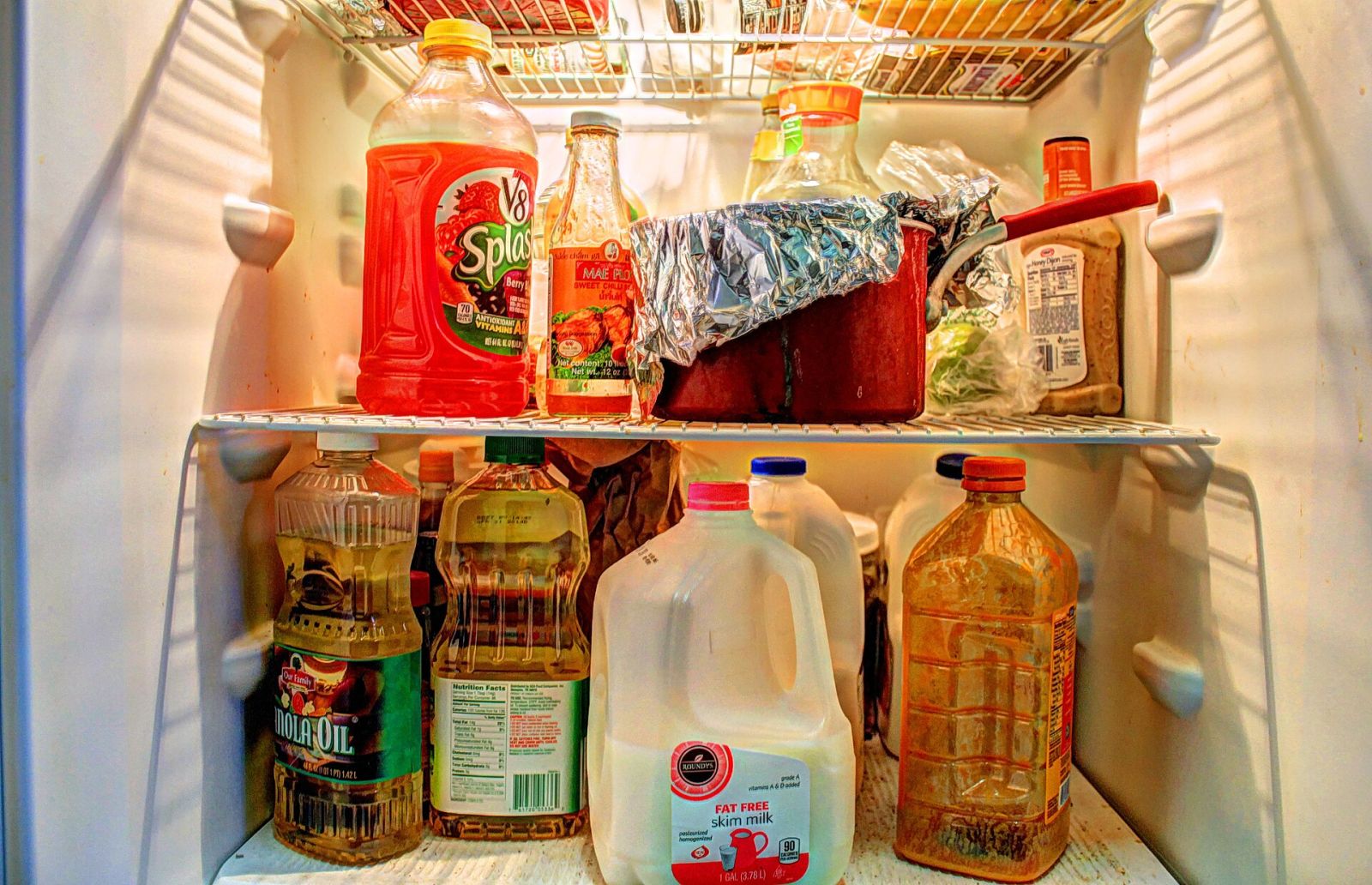
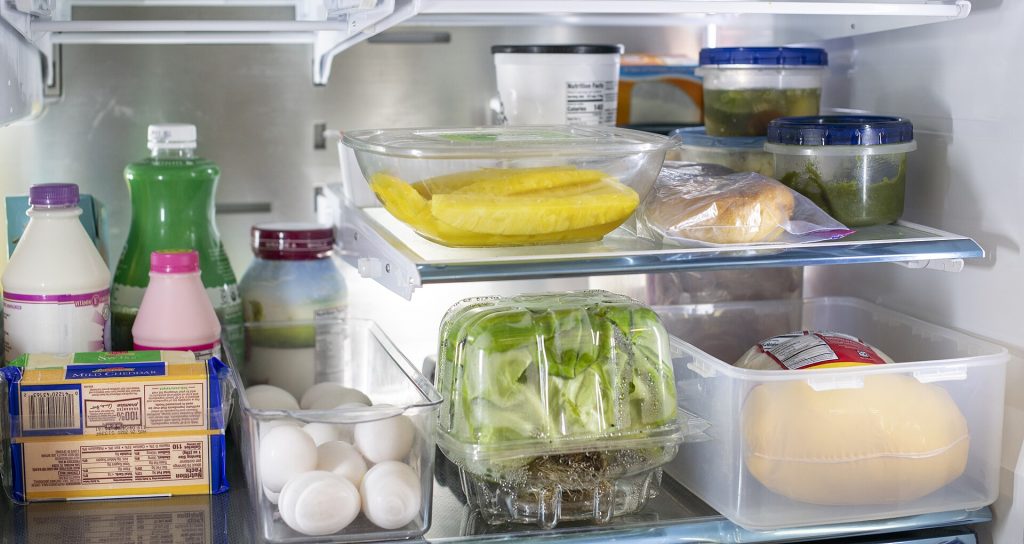
Cold air needs to circulate. When shelves are crammed and the vents at the back of the fridge or between the freezer and fridge are blocked, some areas get too warm while others freeze. At the other extreme, a nearly empty fridge loses its cold faster every time you open the door, because there is little cold food inside to hold the temperature. Aim for full but not crammed, with space around the vents.
7. Leaving hot leftovers out to cool first
This one is a myth that does more harm than good. The USDA’s Food Safety and Inspection Service says hot food can go straight into the refrigerator. Leaving it on the counter for hours lets bacteria grow. The trick is to divide large amounts, like a big pot of soup, into smaller, shallow containers so they cool quickly and do not warm up everything around them.
8. Keeping it in a hot garage
A garage fridge in summer works much harder, and Electrolux says a fridge in a hot garage or a home without air conditioning will simply run more. Very cold garages cause a different problem: some fridges cannot sense that the freezer needs cooling when the garage itself is cold, so frozen food can soften. If you need a garage fridge, look for a model the manufacturer rates for garage use.
9. Ignoring frost on the back wall
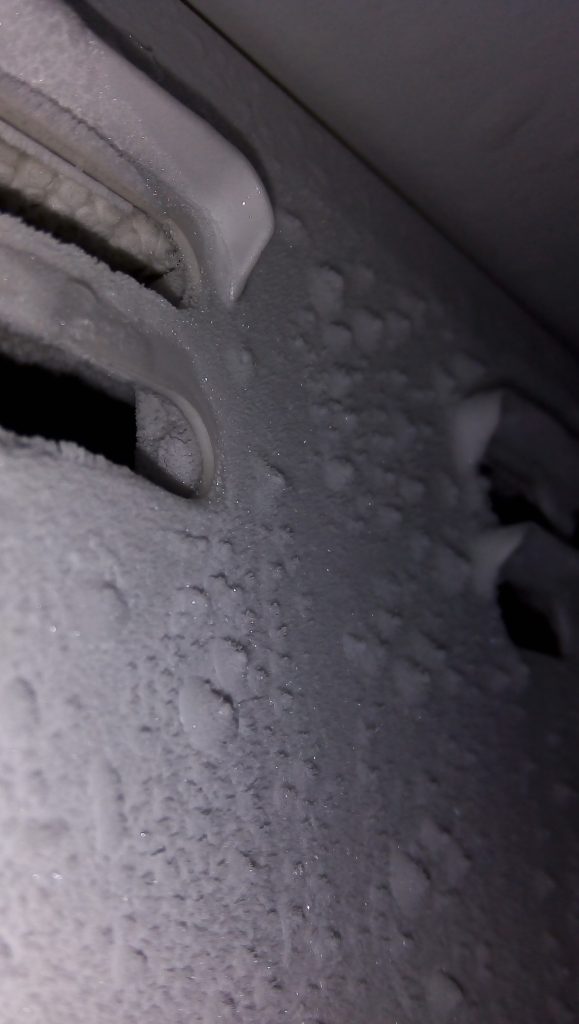
A thin layer of frost is normal in a manual-defrost freezer. But in a frost-free model, a thick sheet of ice on the back wall of the freezer usually means the automatic defrost system has a problem, such as a failed heater, timer or sensor. The ice blocks the air that cools the fridge, so the compressor runs longer and the fresh-food section warms up. That is a repair call, not a setting change.
10. Panicking because it runs nonstop
Here is the one that surprises most people. Constant running is not automatically a problem. It depends on the compressor inside:
| Compressor type | What manufacturers call normal | Source |
|---|---|---|
| Standard fixed-speed (clicks on and off) | About 40 to 80% of the time | Electrolux |
| Modern high-efficiency | 80 to 90%, close to 100% in hot, humid rooms | GE Appliances |
| Variable-speed (inverter or linear) | Up to 100%, pausing mainly to defrost | Frigidaire |
So a quiet, steady hum from a newer French-door model is often exactly what the engineers intended. A fridge also runs nonstop for the first day after it is installed or after a power outage, because it is pulling a warm cabinet down to temperature. The warning signs are different: food not staying cold, a thick frost wall, a hot or noisy compressor, or a fixed-speed fridge that never clicks off.
Time it instead of guessing. The Fridge Run-Time Checker walks you through timing the compressor, asks a few quick questions about your fridge, and compares the result with what manufacturers say is normal. It also estimates the cost of any extra running at your electricity rate.
11. Keeping an old second fridge running
That old fridge in the basement holding a few drinks may cost more to run each year than you would guess, especially if it dates from before 2000. Our guide to how much electricity a refrigerator uses shows when an old one is worth replacing, and why a fridge suddenly costs more to run covers the common causes. Our Appliance Running Cost Calculator works out the yearly cost for your own model.
Bonus: what to do in a power outage
- Keep both doors closed as much as you can.
- According to the USDA, a closed refrigerator keeps food safe for about 4 hours.
- A full freezer holds its temperature for about 48 hours, a half-full one for about 24.
- Throw out perishable food such as meat, fish, eggs, milk and leftovers if it has been above 40°F for more than 4 hours. When in doubt, throw it out.
- When the power comes back, expect the fridge to run constantly for several hours while it cools down again. That is normal.
Products mentioned in this article
- Refrigerator thermometer – the only way to know you are at 40°F or below
- Refrigerator coil cleaning brush – reaches under and behind the fridge
As an Amazon Associate, HomePilot earns from qualifying purchases. Check the listing for current price and compatibility with your home.
Frequently asked questions
What temperature should my refrigerator be?
The FDA recommends 40°F (4°C) or below for the refrigerator and 0°F (-18°C) for the freezer. Many people aim for about 37 to 38°F to leave a safety margin.
Is it normal for a refrigerator to run all the time?
Often, yes. Electrolux says standard compressors typically run 40 to 80 percent of the time, GE says modern efficient models may run 80 to 90 percent, and Frigidaire says variable-speed compressors can run close to 100 percent. Our free Fridge Run-Time Checker helps you tell which applies to yours.
How often should I clean my refrigerator coils?
Many manufacturers suggest once or twice a year, and more often if you have pets that shed. Always unplug the fridge first.
Can I put hot food straight into the fridge?
Yes. The USDA says hot food can go directly into the refrigerator. Split large batches into shallow containers so they cool quickly.
How long does food last in the fridge without power?
About 4 hours if the door stays closed, according to the USDA. A full freezer keeps food frozen for about 48 hours, a half-full one for about 24 hours.