

Last updated November 14, 2026. Reviewed by the HomePilot editorial team.
Fix It · Appliances
You go to fill a glass and the ice bin is empty, again. An ice maker that stops working is one of the most common refrigerator complaints, and it is usually not the ice maker itself that has failed. Most of the time, the problem is something simple: a shutoff arm left up, a water filter that is overdue, a water line that has been turned off or kinked, or a fill tube that has frozen solid. Here is how to work through it, starting with the checks that take seconds.
By the HomePilot Team · Updated November 14, 2026 · Based on manufacturer and appliance repair troubleshooting guidance · How we research
Quick fix
Check that the ice maker is turned on: the wire shutoff arm should be down, or the switch or setting should be on. Make sure the water supply valve to the fridge is open and the line is not kinked. If your filter is more than about 6 months old, replace it. Then look for ice blocking the fill tube above the ice mold. If none of those fix it within 24 hours, the water inlet valve or the ice maker may need replacing.
What is happening? Start here
| What you notice | Likely cause | Fix |
|---|---|---|
| No ice at all, and the arm is up or switch off | Ice maker turned off | Lower the arm or switch it on |
| No ice and no water from the dispenser | Water supply off, kinked line or clogged filter | Open the valve, straighten the line, replace the filter |
| Water dispenser works, but no ice | Frozen fill tube or ice maker fault | Thaw the fill tube; check the ice maker |
| Small, hollow or crescent-shaped cubes | Low water flow from a clogged filter or low pressure | Replace the filter; check the supply line |
| Ice clumped or stuck in the bin | Bin not used often, or temperature swings | Empty and clean the bin |
| Ice production slow | Freezer not cold enough | Set the freezer to 0°F |
| Buzzing or clicking but no water fills | Frozen fill tube or failing water inlet valve | Thaw the tube; test the valve |
Step-by-step: get ice again
- Make sure it is on. Lower the wire shutoff arm, flip the switch behind the ice bin, or check the ice setting on the control panel. Many ice makers get switched off by accident.
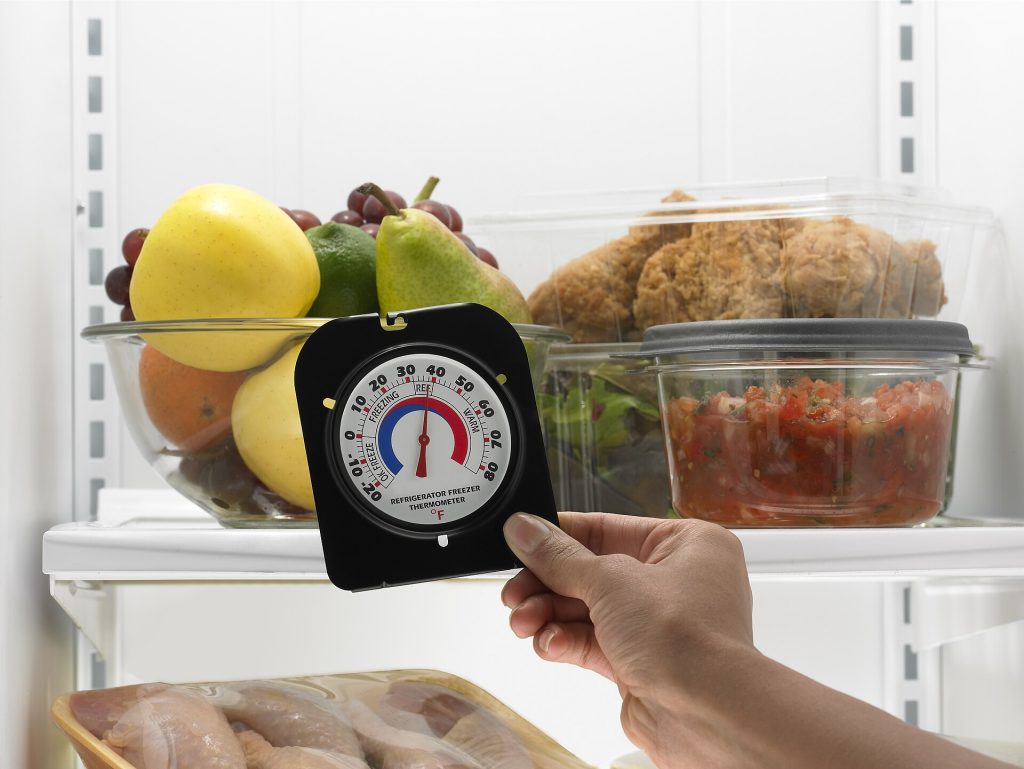
- Check the freezer temperature. The FDA recommends 0°F. If the freezer runs much warmer, ice production slows or stops.
- Test the water dispenser. If it gives no water either, the problem is the supply, not the ice maker.
- Open the supply valve. Find the shutoff on the water line, usually behind the fridge, under the sink or in the basement, and make sure it is fully open.
- Check the supply line behind the fridge for kinks, especially if the fridge was recently moved.
- Replace the water filter if it is more than about 6 months old or water flow is weak.
- Look for ice in the fill tube. With the fridge unplugged, check the small tube that feeds water into the ice mold. Thaw any ice plug carefully with a hair dryer on low, keeping it away from water.
- Empty and reset. Remove clumped ice from the bin, then give the ice maker up to 24 hours to produce a new batch.
Find your refrigerator water filter on Amazon → (Match your fridge model number. As an Amazon Associate, HomePilot earns from qualifying purchases.)
The causes, explained
The shutoff arm or switch
When the bin is full, a wire arm or sensor tells the ice maker to stop. If the arm gets bumped up, or something in the bin holds it up, the ice maker thinks the bin is full. Some models use a switch or a setting on the control panel instead.
Water supply and filter
The ice maker sits at the end of a long, thin water path. A partly closed valve, a kinked line or a clogged filter can reduce flow enough that the ice maker gets too little water, or none. A clogged filter often shows up first as small or hollow cubes and a slow water dispenser.
A frozen fill tube
The fill tube carries water into the ice mold and sits in the coldest part of the freezer. If a little water drips in when it should not, it can freeze into a plug that blocks the next fill. If the tube keeps freezing after you thaw it, the water inlet valve may be leaking slightly and need replacing.
The water inlet valve
The inlet valve is an electrically controlled valve that opens to send water to the ice maker and dispenser. If it fails, or water pressure is too low for it to open properly, no water reaches the ice maker. If you hear the ice maker buzz during a fill cycle but no water comes, the valve is a likely suspect. Replacing it is a moderate DIY job or a quick technician visit.
The freezer door switch
On many fridges, opening the freezer door pauses the ice maker. A faulty door switch can keep it paused even when the door is closed. If the freezer light stays on with the door shut, the switch may be the problem.
Call a technician if
- Water reaches the fridge but the ice maker never fills after you have checked the filter and fill tube.
- The ice maker never cycles or moves at all.
- The fill tube keeps freezing again and again.
- The freezer cannot hold 0°F, which points to a cooling problem rather than the ice maker.
Keep your ice maker working
- Replace the water filter about every 6 months, or as your fridge recommends.
- Use ice regularly, or empty the bin every couple of weeks so cubes do not clump.
- Keep the freezer at 0°F and avoid overpacking it.
- If you go away, turn the ice maker off, then turn it back on when you return.
- Clean the ice bin occasionally with warm water and mild soap.
Frequently asked questions
Why is my ice maker not making ice?
Most often the ice maker is switched off or its arm is up, the water supply is off or kinked, the water filter is clogged, or the fill tube has frozen. A failed water inlet valve or ice maker is less common.
How do I reset my ice maker?
It depends on the model. Many reset by turning the ice maker off and on, or by holding a reset or test button; check your manual. Then allow up to 24 hours for new ice.
Why does my water dispenser work but my ice maker does not?
Water is reaching the fridge, so the supply is fine. The likely causes are a frozen fill tube, the shutoff arm, or a fault in the ice maker itself.
How cold should my freezer be for the ice maker to work?
The FDA recommends 0°F. Much warmer temperatures slow or stop ice production.
How often should I change my refrigerator water filter?
About every 6 months, or as your manufacturer recommends. A clogged filter is a common cause of slow or no ice.

