

Last updated November 14, 2026. Reviewed by the HomePilot editorial team.
Fix It · Appliances
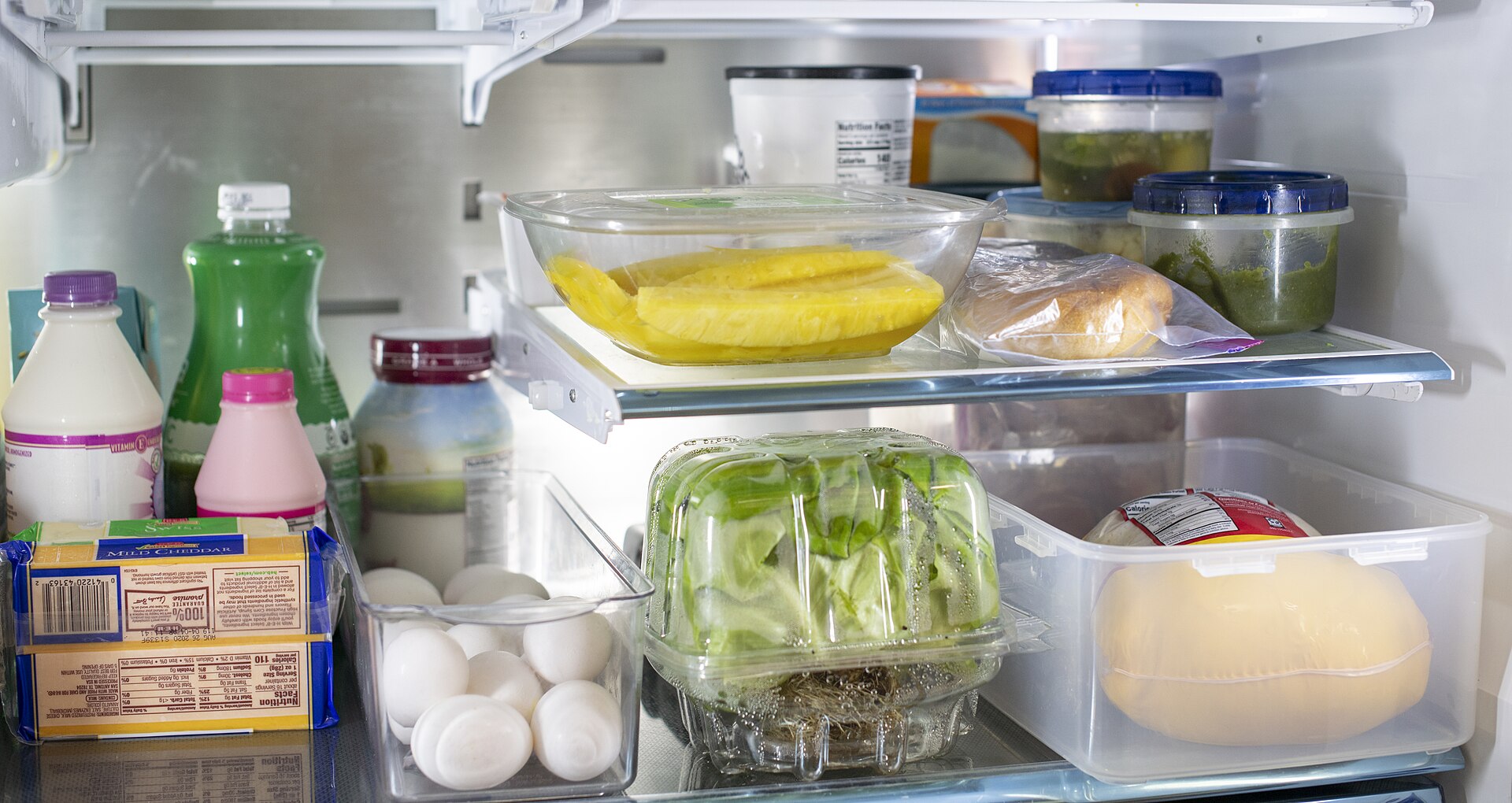
Frozen lettuce, slushy milk, eggs with cracked shells: a refrigerator that freezes food wastes money and makes a mess. It can seem like a sign of a big, expensive failure, but most of the time the cause is simple: a temperature set too low, food blocking the vent where icy air comes in from the freezer, or a small part that controls that airflow. Here is how to find the cause and fix it, starting with the free checks.
By the HomePilot Team · Updated November 11, 2026 · Based on manufacturer guidance and appliance repair troubleshooting · How we research
Quick fix
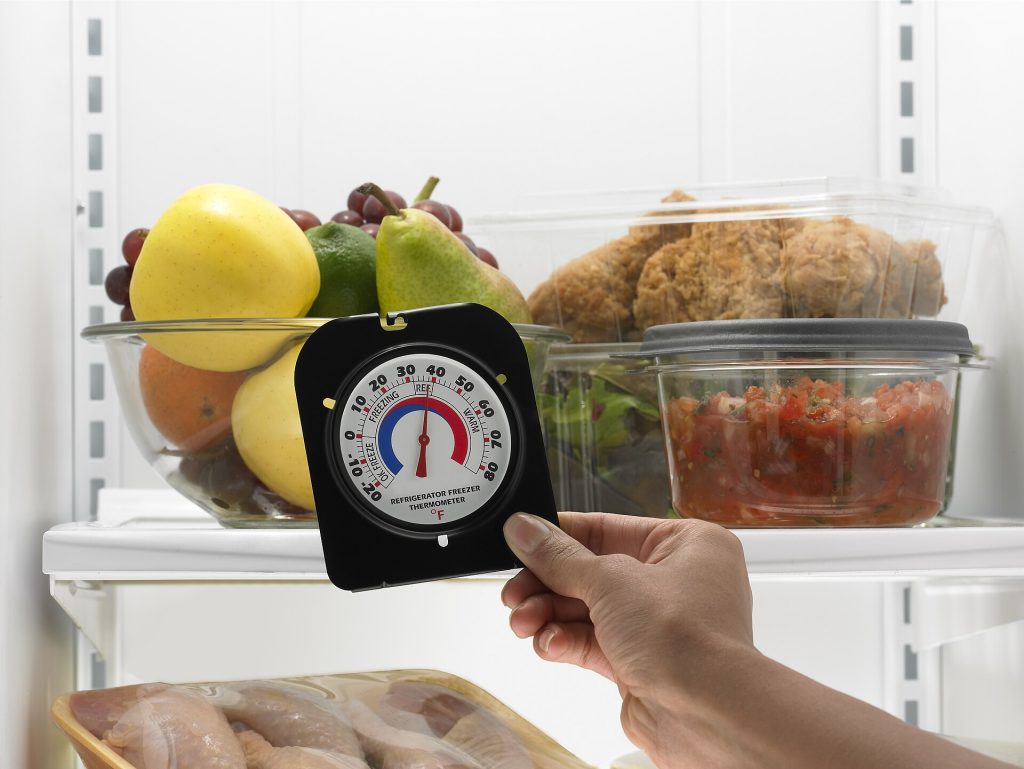
Put an appliance thermometer in a glass of water on a middle shelf and check it after a few hours. The FDA recommends keeping your fridge at 40°F or below, and many manufacturers suggest about 37°F. If it reads colder, raise the setting a notch and wait 24 hours. Then move food at least a couple of inches away from the cold-air vent, usually at the top or back of the fridge section. If food still freezes at a normal setting, a damper or temperature sensor has likely failed.
Where is it freezing? Start here
| What you notice | Likely cause | Fix |
|---|---|---|
| Only items near the top or back vent freeze | Food blocking or sitting in the cold-air stream | Move items away from the vent |
| Everything is too cold | Temperature set too low or reset after a power outage | Raise the setting, wait 24 hours |
| Food freezes even at a normal setting | Air damper stuck open | Inspect the damper; often a part replacement |
| Freezing comes and goes, temperatures swing | Faulty thermistor (temperature sensor) or control | Have the sensor tested |
| Started after a big shop or holiday | Quick-cool or turbo mode left on | Turn the boost mode off |
| Fridge nearly empty | Not enough food to hold a stable temperature | Add a few water bottles |
Step-by-step: stop your fridge freezing food
- Measure the real temperature. Put an appliance thermometer in a glass of water on a middle shelf for a few hours. The display or dial can be wrong.
- Check the setting. Aim for about 37°F. On a numbered dial, a middle setting is a good starting point. Some fridges reset to defaults after a power outage.
- Wait 24 hours after any change. The temperature needs time to settle before you judge it.
- Find the cold-air vent. It is usually at the top or back of the fresh-food section. Keep about 2 inches of space around it and move lettuce, berries, eggs and milk to lower shelves or the door.
- Turn off boost modes. Quick-cool, turbo or similar settings can stay on longer than you expect.
- Check the door seal and do not overload. Crammed shelves block air from circulating, creating freezing pockets.
- Watch the vent. If cold air keeps blowing in even after the fridge reaches temperature, the damper may be stuck open.
- Call a technician if food still freezes at a normal setting with good airflow; the damper or sensor likely needs testing.
The causes, explained
Temperature set too low
The simplest cause. A fridge set at 33 or 34°F averages just above freezing, so the coldest spots dip below it. Repair guides note that air coming straight from the vent can be much colder than the average reading. Setting it to about 37°F keeps food safe with a margin above freezing.
Food blocking the vent
In most modern fridges, the fresh-food section is cooled by air blown in from the freezer through a vent at the top or back. Anything sitting right in front of it gets blasted with sub-freezing air and freezes, even when the rest of the fridge is fine. This is why the top shelf often freezes first.
A stuck air damper
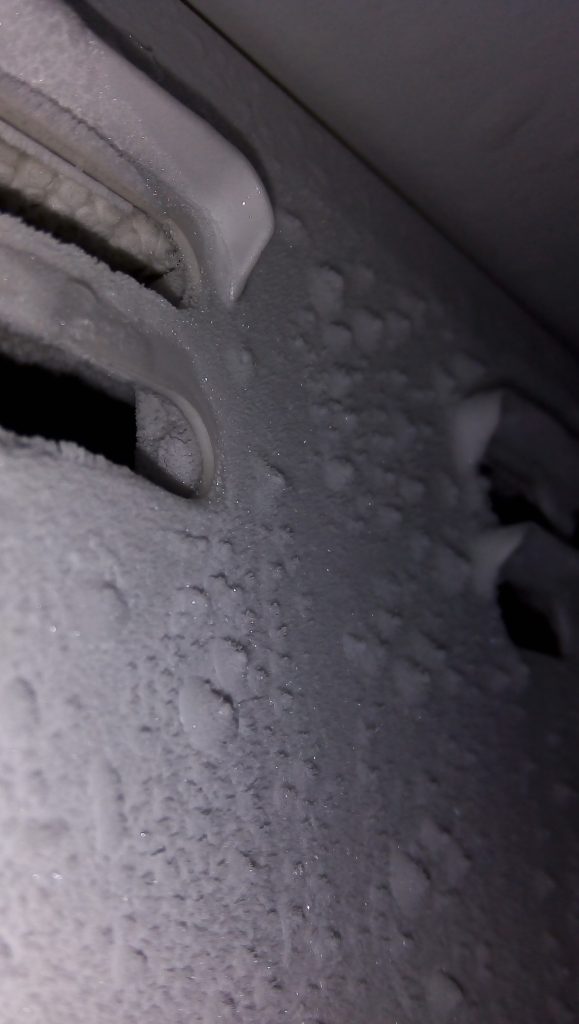
The damper is a small door or flap that opens and closes to control how much freezer air flows into the fridge section. If it sticks open, cold air pours in continuously and food freezes no matter what the setting says. On many models it sits behind a small cover near the vent. A stuck or broken damper usually means replacing the damper assembly.
A failing temperature sensor
Many fridges use a thermistor, a small sensor that tells the control board how cold the fridge is. If it reports the fridge as warmer than it really is, the control keeps cooling and food freezes. Symptoms include temperature swings and freezing that comes and goes. A technician can test it; the sensor itself is often an inexpensive part.
Do not just keep turning it warmer
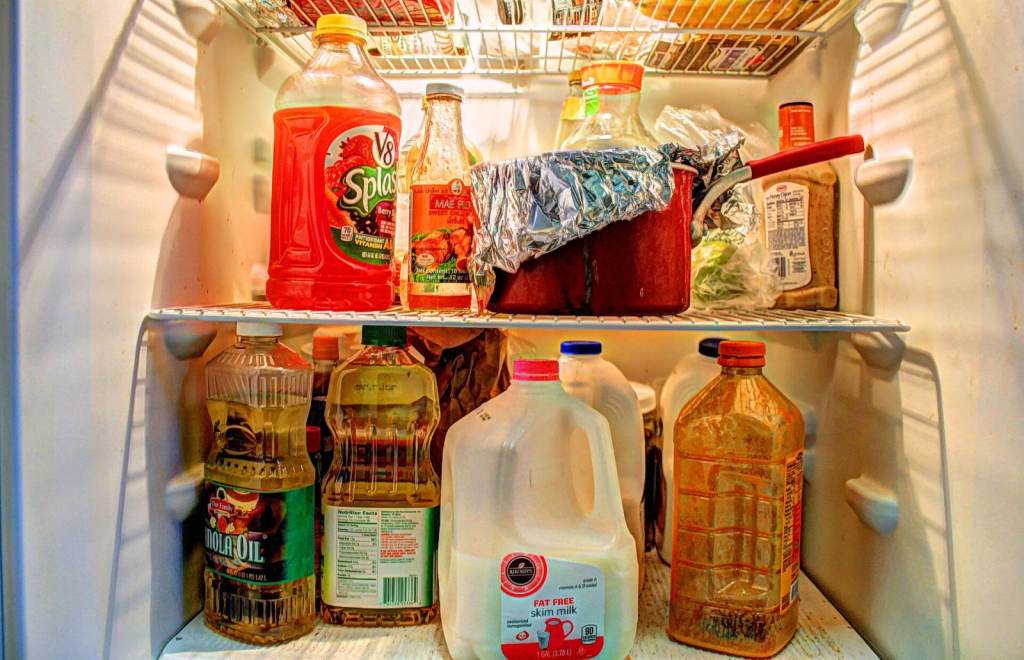
If the damper or sensor has failed, raising the setting may stop the freezing on one shelf while leaving other areas warmer than the FDA’s 40°F limit, which is a food safety risk. Confirm with a thermometer in several spots, and fix the cause rather than masking it.
Where to store freeze-sensitive food
- Lettuce, berries and soft fruit: crisper drawers, away from the vent.
- Eggs: a middle shelf in their carton, not the top shelf near the vent.
- Milk and juice: a middle or lower shelf; the door is fine for short-term use.
- Leftovers and drinks: top shelves are fine for items that tolerate colder air.
Is it the freezer that is too cold?
A freezer is supposed to be cold: the FDA recommends 0°F. But if the freezer is far colder and the fridge section is freezing too, the whole system may be overcooling, which also wastes electricity. If your fridge seems to run constantly, try our Fridge Run-Time Checker.
Shop refrigerator thermometers on Amazon → (As an Amazon Associate, HomePilot earns from qualifying purchases.)
Frequently asked questions
Why is my refrigerator freezing everything?
Usually the temperature is set too low or was reset after a power outage. If everything still freezes at a normal setting, the air damper may be stuck open or the temperature sensor may have failed.
Why does food freeze on the top shelf of my fridge?
The cold-air vent from the freezer is often near the top or back, so items closest to it freeze first. Keep about 2 inches of space around the vent and move delicate foods lower.
What temperature should my fridge be to stop freezing food?
The FDA recommends 40°F or below, and many manufacturers suggest about 37°F, which keeps food safe while staying above freezing.
How long does a fridge take to adjust after changing the setting?
Allow about 24 hours for the temperature to stabilize before checking it again.
Is a refrigerator freezing food expensive to fix?
Often not. Settings and food placement are free fixes. A failed sensor is often an inexpensive part, while a damper assembly costs more.

