

Last updated November 24, 2026. Reviewed by the HomePilot editorial team.
Checklist · Food safety
The lights go out, and within a minute you are staring at the refrigerator, wondering how long everything inside will last. It is a stressful question, and an expensive one, because a fridge and freezer can hold hundreds of dollars of food. The good news is that federal food safety agencies have clear rules, and they come down to two numbers: time and temperature. Here is how long food stays safe, how to keep it cold longer, what to keep or throw away afterward, and how to prepare before the next outage.
By the HomePilot Team · Updated November 20, 2026 · Guidance from the USDA, FoodSafety.gov and the CDC · How we research
4 hours
How long an unopened refrigerator keeps food safe (USDA)
48 hours
A full freezer, door closed (24 hours if half full)
40°F
The line: perishable food above it for 2+ hours should go
The short answer
Keep the doors closed. An unopened refrigerator keeps food safe for up to 4 hours without power. A full freezer holds for about 48 hours, and a half-full freezer for about 24 hours. After 4 hours, throw out perishable refrigerated food such as meat, poultry, fish, eggs, milk and leftovers. Food that has been above 40°F for 2 hours or more should be discarded. Never taste food to decide if it is safe, and when in doubt, throw it out.
Will your pipes freeze tonight? Check in seconds with our free frozen pipe risk checker: enter the forecast low and where your pipes run.
The timeline
| How long without power | What to do |
|---|---|
| 0 to 4 hours | Keep the refrigerator and freezer doors closed. The fridge should keep food safe for up to 4 hours. |
| At about 4 hours | Move refrigerated perishables into a cooler packed with ice or frozen gel packs if you have one, or discard perishables that have been warm. |
| 4 hours or more, no cooler | Throw out perishable refrigerated food such as meat, poultry, fish, eggs, milk and leftovers. |
| Up to 24 hours | A half-full freezer with the door closed should still be safe. |
| Up to 48 hours | A full freezer with the door closed should still be safe. Consider dry ice or a generator or power station before this point. |
| After power returns | Check each item separately, check the freezer thermometer and use the keep or toss lists below. |
The outage checklist
Before an outage
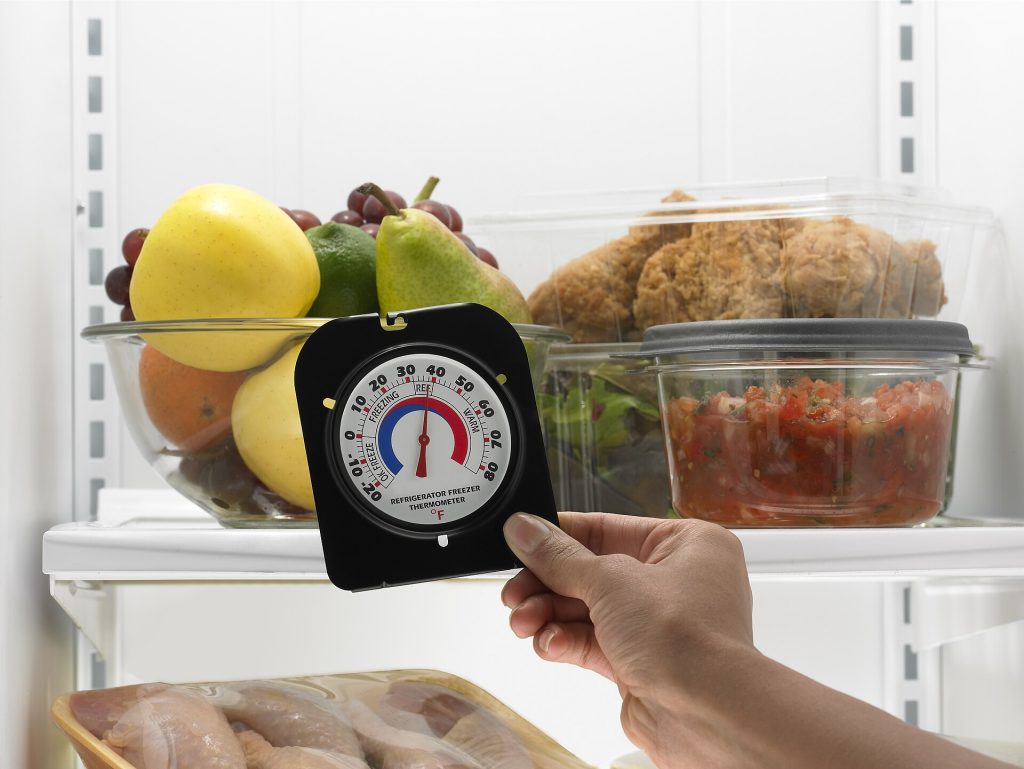
- Put an appliance thermometer in the fridge and the freezer. The fridge should be at 40°F or below and the freezer at 0°F or below. It is the only way to know what the temperature really was while you were away.
- Freeze water bottles or ice packs to use as extra cold sources, and fill empty space in the freezer so it holds its temperature longer.
- Have a cooler or two ready, and know where you can buy ice or dry ice.
- Stock shelf-stable foods and a manual can opener.
- Keep a plan for power: a portable power station or generator can run a fridge, but check its watt rating first.
Shop appliance thermometers on Amazon → · Shop coolers → (As an Amazon Associate, HomePilot earns from qualifying purchases.)
When the power goes out
- Keep both doors shut. Every opening lets cold air out, and cold air is what keeps food safe.
- Note the time the power went out.
- Group food together in the freezer so it stays colder.
- At about 4 hours, move perishables into a cooler with ice or frozen gel packs, aiming to keep them at 40°F or below.
- Use dry ice carefully if you buy it. About 50 pounds should keep an 18-cubic-foot freezer cold for about 2 days, according to one county health guide. Handle dry ice with gloves and ventilate the room; it can cause burns and release carbon dioxide.
- Eat the most perishable food first, such as leftovers, milk and meat from the fridge, if it is still safe.
Keep or toss: what to do with refrigerated food
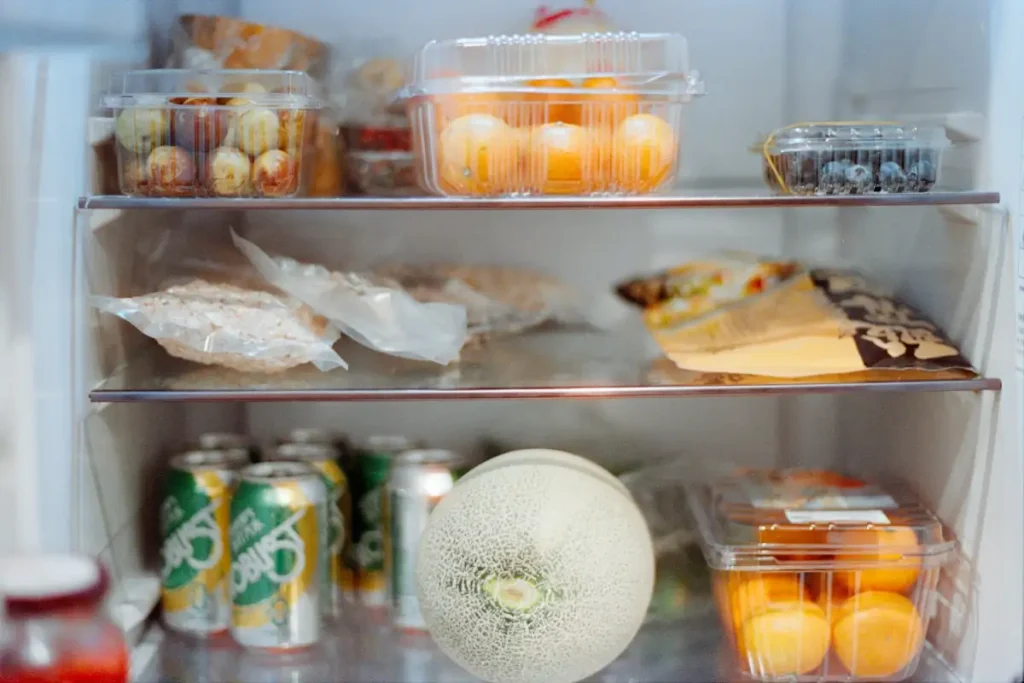
The rule from FoodSafety.gov is simple: perishable food that has been at 40°F or above for more than 2 hours should be discarded. For specific foods, the FoodSafety.gov chart gives these examples when they have been above 40°F for more than 2 hours:
| Food | Keep or discard |
|---|---|
| Meat, poultry, seafood, cooked or raw | Discard |
| Shredded cheese and low-fat cheese | Discard |
| Processed cheese | Keep |
| Grated Parmesan or Romano in a can or jar | Keep |
| Pasta salads with mayonnaise or vinaigrette, and potato salad | Discard |
| Fresh pasta | Discard |
| Cheesecake | Discard |
| Commercial garlic in oil | Discard |
| Peanut butter | Keep |
| Opened mayonnaise, tartar sauce, horseradish | Discard if above 50°F for more than 8 hours |
| Waffles, pancakes and bagels | Keep |
This is only a sample. The full list covers dairy, eggs, produce, baked goods and more, so keep the FoodSafety.gov food safety charts handy. And remember the golden rule: when in doubt, throw it out.
What to do with frozen food
- Still has ice crystals, or is at 40°F or below: it can be safely refrozen or cooked, according to the CDC. Quality, such as texture and flavor, may suffer.
- Thawed and held above 40°F for more than 2 hours: discard meat, poultry, seafood, stews and soups.
- Check the freezer thermometer when power returns. If it reads 40°F or below, the food is safe and may be refrozen.
- Check each item separately. Do not judge the whole freezer by the top layer.
Mistakes to avoid
- Do not taste food to test it. You cannot tell by looks or smell whether food is safe.
- Do not use snow or the cold outdoors as a fridge. Temperatures swing, sunlight can warm food, and animals can get to it. Emergency officials list it as a key mistake in winter outages.
- Do not keep opening the doors to check on things.
- Do not refreeze food that has thawed and warmed above 40°F for more than 2 hours.
- Do not run a generator indoors. See our winter power outage guide for carbon monoxide safety.
After the power comes back
- Check the thermometers. Note the fridge and freezer temperatures.
- Sort the food. Use the lists above and the FoodSafety.gov charts.
- Discard anything doubtful, and any food that touched raw meat juices.
- Wash fruits and vegetables with water from a safe source before eating.
- Clean the fridge and freezer with warm water and soap if anything spoiled or leaked.
- Keep an eye on your fridge. If it seems to struggle after an outage, see our guides on a fridge suddenly using more electricity and a refrigerator freezing food.
If you are unsure about a specific food, the USDA Meat and Poultry Hotline at 1-888-674-6854 can answer questions on weekdays, and the USDA’s online assistant at ask.usda.gov is available any time. Check their site for current hours. Smart devices also tend to disconnect in an outage; see how to get them back online.
Frequently asked questions
How long does food last in the fridge without power?
The USDA says an unopened refrigerator keeps food safe for up to 4 hours. After that, discard perishable food such as meat, poultry, fish, eggs, milk and leftovers.
How long does food last in the freezer without power?
About 48 hours in a full freezer and about 24 hours in a half-full freezer, if the door stays closed.
Can I refreeze food that thawed?
Yes, if it still contains ice crystals or is at 40°F or below. If it was above 40°F for more than 2 hours, discard it.
Is it safe to eat food if it smells and looks fine?
Not necessarily. Never rely on taste, smell or appearance. If perishable food was above 40°F for more than 2 hours, discard it.
Should I put food outside in the snow?
No. Outdoor temperatures swing and can warm food in the sun, and animals can reach it. Use coolers with ice or frozen gel packs instead.
Sources
- FoodSafety.gov: Avoid foodborne illness during temporary power outages
- CDC: Keep food safe after a disaster or emergency
- CDC: Discarding food after a power outage
- FoodSafety.gov: Three ways to keep food safe when you lose power
- FoodSafety.gov food safety charts, via Porter County Health
- DeKalb County, GA: Food safety after a power outage (dry ice guidance)
- WHAS11: How to survive a winter power outage at home

