

Last updated November 14, 2026. Reviewed by the HomePilot editorial team.
Checklist · Holiday safety
The lights go up, the tree comes in, the candles come out, and the risk of a house fire quietly goes up with them. The National Fire Protection Association (NFPA) calls December a leading month for U.S. home fires, largely because of the things we do to celebrate. The good news is that nearly all holiday fires are preventable with a few habits. This checklist covers the tree, the lights, candles, the fireplace and what to do when the season is over.
By the HomePilot Team · Updated November 14, 2026 · Statistics and safety guidance from the National Fire Protection Association · How we research
~150
Home fires a year that start with Christmas trees (NFPA)
1 in 5
Christmas tree fires started by decorative lights (NFPA)
Nearly half
Of December decoration fires started by candles (NFPA)
Before you start: the short answer
Keep the tree watered daily and at least 3 feet from any heat source; use lab-certified lights, check cords for damage, and turn lights off when you go to bed or leave home; never leave candles burning unattended; and get rid of the tree soon after the holidays, before it dries out. Christmas tree fires are not common, but NFPA data show they are far more likely than typical home fires to be deadly.
The holiday decorating safety checklist
Choosing the tree
- Pick a fresh tree. Green needles that do not fall off when touched are a good sign.
- Cut 1 to 2 inches off the trunk before you put it in the stand, so it can absorb water.
- Artificial tree? Look for a label saying it is fire-resistant.
Placing the tree
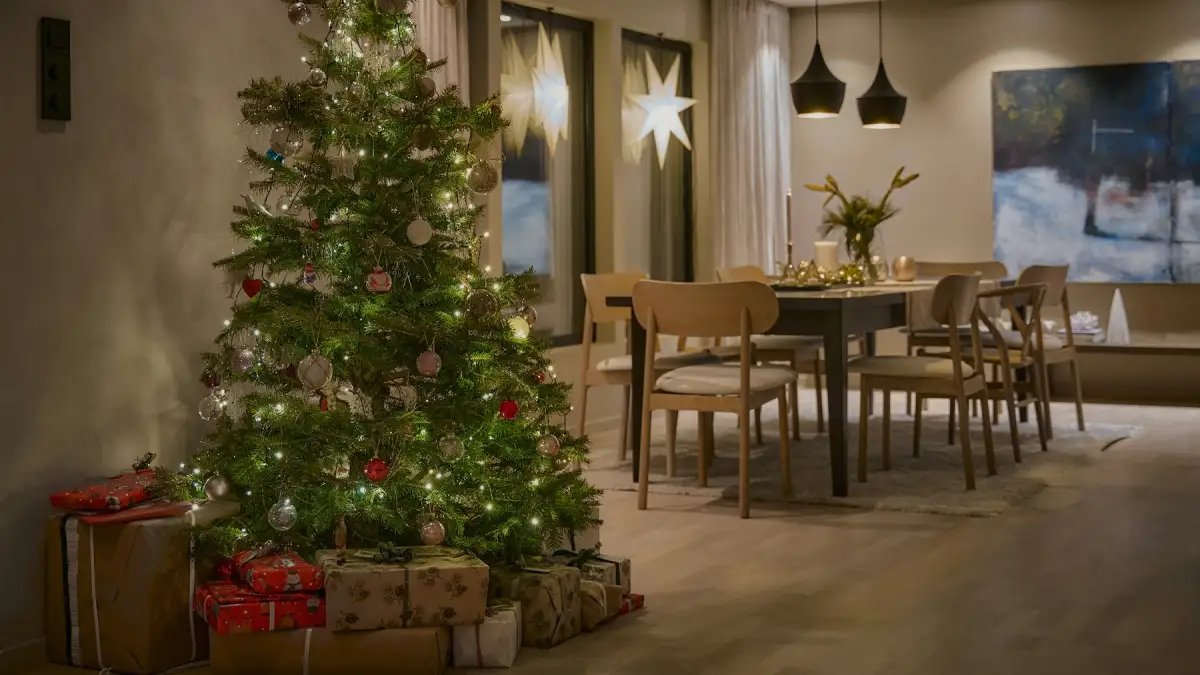
- Keep it at least 3 feet from heat sources: fireplaces, radiators, space heaters, heat vents, candles and lights.
- Do not block exits or hallways.
- Add water every day. A tree can drink a lot, especially in the first week, and a dry tree burns very quickly.
Lights and electrical decorations
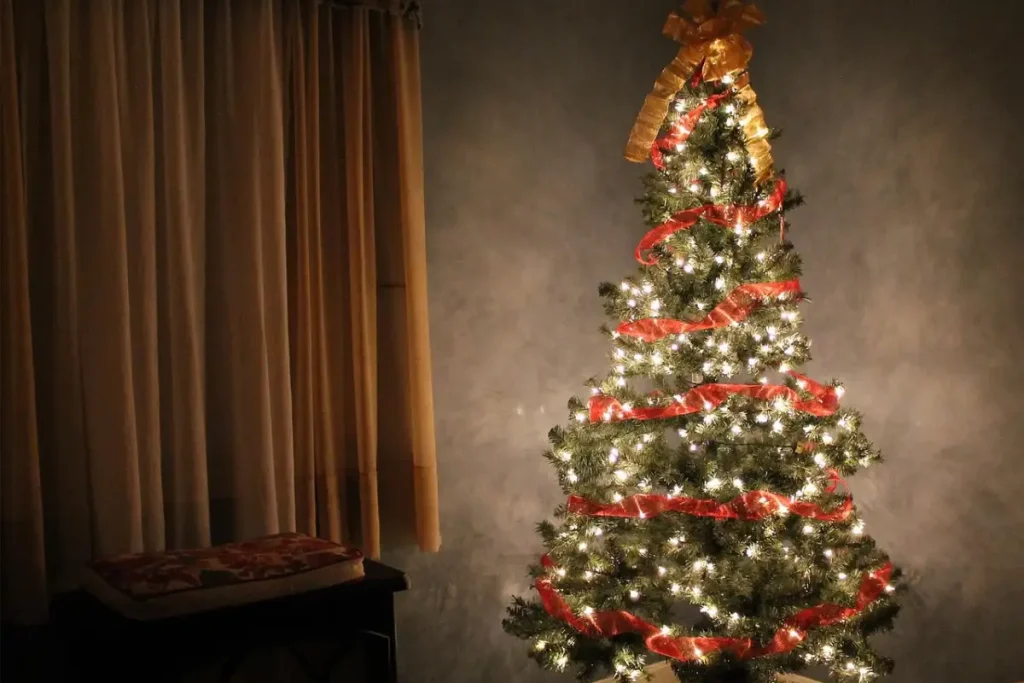
- Use lights certified by a recognized testing lab, such as UL or ETL.
- Match the lights to the location: indoor lights indoors, outdoor-rated lights and cords outside.
- Inspect every strand before hanging; throw away sets with frayed wires, broken sockets or loose connections.
- Check the maker’s instructions for how many strands you can safely connect end to end.
- Do not overload outlets or power strips, and never run cords under rugs or pinch them in doors.
- Turn lights off when you go to bed or leave home; a timer or smart plug makes it automatic.
- Consider LEDs: they run much cooler and use far less electricity; see what Christmas lights cost to run.
Outdoor decorations
- Plug outdoor lights into GFCI-protected outlets.
- Use outdoor-rated extension cords and keep connections off the ground and out of puddles and snow.
- Fasten lights with insulated clips, not nails or staples that can pierce the cord.
- Never use a ladder near power lines.
Candles
- Never leave a burning candle unattended, and blow candles out before you leave a room or go to sleep.
- Keep candles at least 12 inches from anything that can burn, including trees, garlands, curtains and paper decorations.
- Use sturdy holders on stable surfaces, out of reach of children and pets.
- Consider battery-operated flameless candles, especially in windows and near decorations.
Fireplaces
- Use a fireplace screen and keep decorations, stockings and garlands away from the opening when a fire is lit.
- Never burn wrapping paper; it can ignite suddenly and send burning pieces up the chimney.
- Have the chimney inspected if you have not in the past year.
After the holidays
- Take the tree down promptly. Trees keep drying out, and NFPA data show a large share of Christmas tree fires happen in January.
- Do not store a dry tree in the garage or against the house; follow your local tree recycling program.
- Store lights carefully to protect the wires, and inspect them again next year.
Kids, pets and holiday hazards
- Anchor the tree to a wall or ceiling hook if you have climbing kids or cats.
- Hang glass ornaments and lights higher up, out of reach of small hands and paws.
- Keep cords tidy and out of chewing range; pets, especially puppies and rabbits, may chew wires.
- Use flameless candles anywhere a tail or toddler could knock them over.
Gifts with lithium-ion batteries
Many holiday gifts, from phones and tablets to e-bikes, scooters and toys, run on lithium-ion batteries, and NFPA highlights them in its holiday safety guidance. Buy products certified by a recognized testing lab, charge them with the cable and charger that came with them, charge on hard surfaces away from beds and couches, and stop using any battery that swells, gets very hot or smells unusual. Avoid charging large items like e-bikes overnight or blocking an exit while they charge.
Make sure your alarms are ready
Before the decorations go up, test every smoke alarm and make sure you have one in each bedroom, outside sleeping areas and on every level. Our guide to how many smoke detectors you need covers placement. Keep a fire extinguisher in the kitchen, and make sure everyone knows two ways out of every room.
Shop outdoor smart plugs and timers on Amazon → · Shop flameless candles → (As an Amazon Associate, HomePilot earns from qualifying purchases.)
If a tree catches fire
- Get everyone out and call 911 from outside; a dry tree can be engulfed in seconds.
- Do not try to put out a fully burning tree.
- Close doors behind you as you leave to slow the spread.
Frequently asked questions
How far should a Christmas tree be from a heat source?
At least 3 feet from fireplaces, radiators, space heaters, heat vents, candles and lights, according to fire safety guidance.
Is it safe to leave Christmas lights on overnight?
Fire safety officials recommend turning decorative lights off when you go to bed or leave home. A timer or smart plug makes it easy.
What causes most Christmas tree fires?
NFPA data show decorative lights start about one in five Christmas tree fires, and electrical problems and heat sources too close to the tree are other leading factors.
How often should I water a Christmas tree?
Check and add water every day; a fresh tree can drink a lot, and a dry tree is much more flammable.
How many strands of lights can I connect together?
It depends on the lights. Check the manufacturer’s label or instructions for the maximum number of strands you can safely connect.

