

Last updated November 11, 2026. Reviewed by the HomePilot editorial team.
By the Numbers · Home safety
Most homes have smoke alarms. Far fewer have enough of them, in the right places, still within their working life. That gap matters: the National Fire Protection Association (NFPA) reports that roughly three in five home fire deaths happen in homes with no smoke alarms or no working ones. Here is exactly how many smoke detectors your home needs, where to put them, where not to, and how to tell when they have expired.
By the HomePilot Team · Updated November 11, 2026 · Guidance from the National Fire Protection Association and U.S. Fire Administration · How we research
3 in 5
Home fire deaths in homes with no smoke alarms or none working (NFPA)
55%
Lower risk of dying in a reported home fire with working alarms (NFPA)
10 years
When to replace every smoke alarm
The short answer
The NFPA recommends a smoke alarm inside every bedroom, outside each sleeping area (such as the hallway outside the bedrooms) and on every level of the home, including the basement. Interconnected alarms are best, so when one sounds, they all sound. Keep alarms at least 10 feet from the stove, test them monthly and replace them when they are 10 years old.
How to count the smoke alarms you need
+ 1 outside each separate sleeping area
+ 1 on every level without a bedroom or hallway alarm (including the basement)
= minimum smoke alarms
| Home | How the count works | Minimum alarms |
|---|---|---|
| 1-bedroom apartment | 1 bedroom + 1 outside it | 2 |
| 2-bedroom apartment, bedrooms off one hall | 2 bedrooms + 1 hallway | 3 |
| 3-bedroom ranch with a basement | 3 bedrooms + 1 hallway + 1 basement | 5 |
| 4-bedroom two-story with a basement | 4 bedrooms + 1 upstairs hall + 1 main level + 1 basement | 7 |
These are minimums. The NFPA notes that large homes may need extra alarms, and your local building code may require more. On levels without bedrooms, put alarms in the living room or near the stairway to the next level, or both.
Where to install smoke alarms
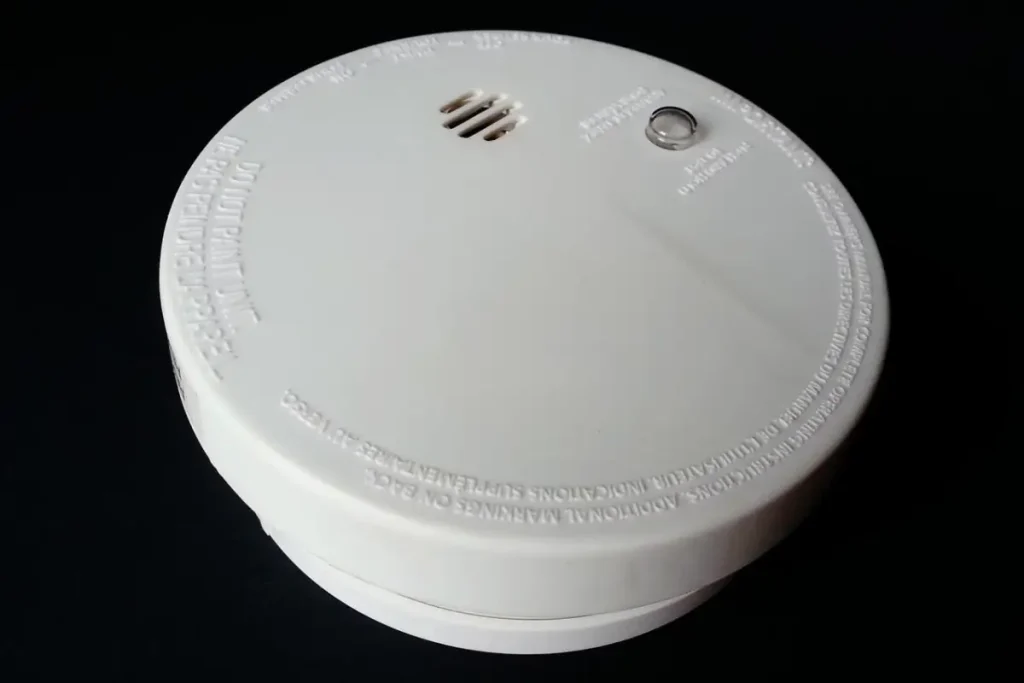
- Inside every bedroom, even for existing homes, as the NFPA’s code requires.
- Outside each sleeping area, such as the hallway outside bedrooms.
- On every level, including the basement, where the alarm goes on the ceiling at the bottom of the stairs leading up.
- On the ceiling or high on a wall, since smoke rises.
- On a pitched ceiling, fire safety groups suggest within about 3 feet of the peak, but not in the very apex.
Where not to install them
- Within 10 feet of the stove or other cooking appliances, to cut down on false alarms.
- In bathrooms or right outside showers, where steam can set them off.
- Near windows, doors or vents where drafts can blow smoke away from the sensor.
- In garages, attics or unheated spaces where temperatures fall outside the alarm’s rated range; use a heat alarm instead where appropriate.

Photoelectric, ionization or both?
Smoke alarms use two main sensing technologies. Ionization alarms tend to respond faster to flaming fires, while photoelectric alarms tend to respond faster to slow, smoldering fires, and are less prone to nuisance alarms from cooking, which makes them a better choice near kitchens. Because you cannot predict which kind of fire might start, fire safety organizations generally recommend using both types, or dual-sensor alarms that combine them.
Smart smoke alarms add phone alerts when you are away and can tell you which room triggered the alarm. They are a useful upgrade, but they are not a substitute for having enough alarms in the right places.
Why interconnected alarms matter
In a two-story home, a fire in the basement or kitchen can grow for minutes before smoke reaches a bedroom alarm. Interconnected alarms solve that: when one detects smoke, every alarm in the home sounds. The NFPA says it is best to use interconnected smoke alarms. Newer homes are often hardwired and interconnected; in older homes, wireless interconnected alarms can be added without running new wires.
Shop wireless interconnected smoke alarms on Amazon → (As an Amazon Associate, HomePilot earns from qualifying purchases.)
Renting? In most places, landlords are responsible for installing working smoke alarms, while tenants are usually expected to test them and report problems. Check your lease and local rules, test the alarms when you move in, and ask for any missing ones to be added.
Keeping them working: the numbers to remember
| Task | How often |
|---|---|
| Press the test button | Once a month |
| Replace batteries (replaceable-battery alarms) | At least once a year, or when it chirps |
| Replace the whole smoke alarm | Every 10 years from the manufacture date on the back |
| Replace carbon monoxide or combination alarms | About every 7 years, per Kidde, or as the label says |
Check the manufacture date on the back of each alarm; the 10 years count from that date, not from when you installed it. The NFPA notes that sensors lose sensitivity over time. If an alarm with a sealed 10-year battery starts chirping, replace the whole unit. See why smoke alarms chirp.

Do not forget carbon monoxide alarms
Smoke alarms do not detect carbon monoxide. If your home has gas appliances, a fireplace or an attached garage, you also need CO alarms; the CPSC recommends one on each level of the home and outside sleeping areas. Combination smoke and CO alarms cover both in one device. When a CO alarm reaches the end of its life, it chirps in a pattern a new battery will not fix; see CO alarm chirping explained.
Make the alarms count
- Make sure everyone can hear an alarm from their bed with the door closed.
- For people who are deaf or hard of hearing, use alarms with strobe lights and bed shakers.
- Plan two ways out of every room and agree on an outside meeting spot.
- When an alarm sounds, get outside and stay outside.
Frequently asked questions
How many smoke detectors do I need?
At least one in every bedroom, one outside each sleeping area and one on every level, including the basement. A 3-bedroom ranch with a basement needs at least five.
Where should smoke detectors be placed?
Inside bedrooms, in hallways outside sleeping areas and on every level, mounted on the ceiling or high on a wall, and at least 10 feet from cooking appliances.
How long do smoke detectors last?
Replace them every 10 years from the manufacture date printed on the back. Carbon monoxide and combination alarms usually need replacing sooner, around 7 years.
Should smoke detectors be interconnected?
Yes, when possible. The NFPA says interconnected alarms are best because when one sounds, they all sound.
Do I need a smoke detector in the kitchen?
Not right next to the stove. Install alarms at least 10 feet from cooking appliances to reduce false alarms, while still covering the kitchen area.

