

Last updated November 24, 2026. Reviewed by the HomePilot editorial team.
By the Numbers · Plumbing
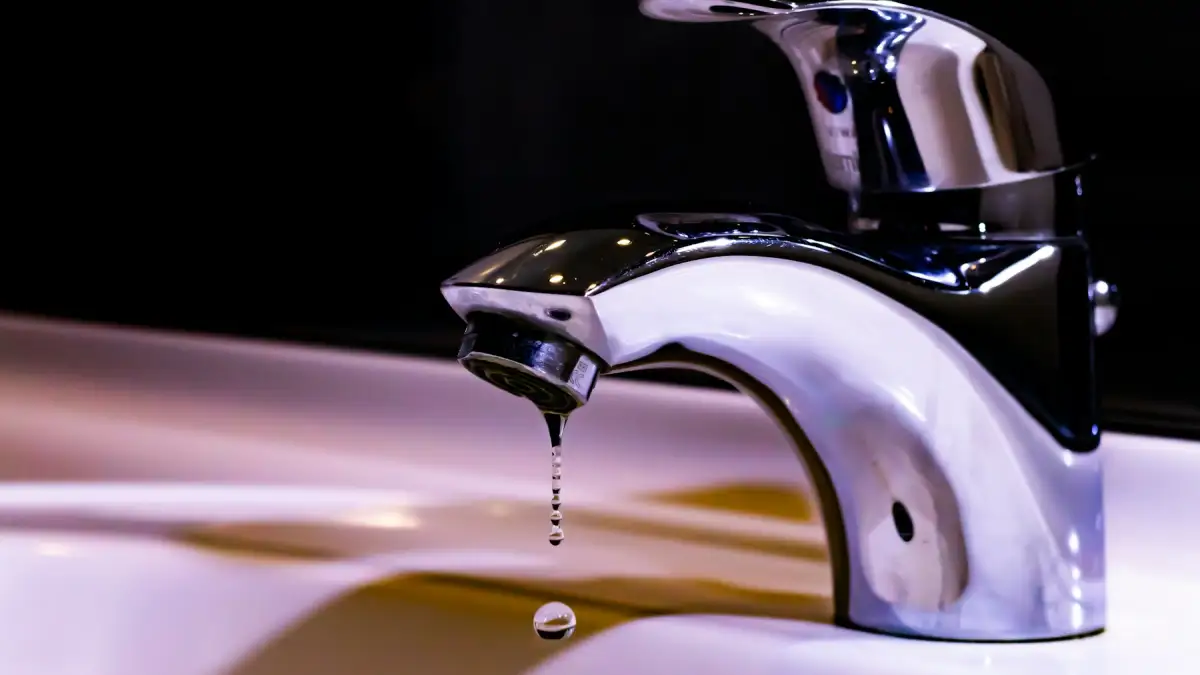
A dripping faucet is easy to ignore. It is just a drop at a time, after all. But it drips every second of every day, and those drops add up to thousands of gallons a year. If the drip is on the hot side, you are also paying to heat water that goes straight down the drain. Here is what a leaky faucet really costs, how to measure your own drip, and how to fix the four common faucet types, usually for a few dollars in parts.
By the HomePilot Team · Updated November 16, 2026 · Water-waste figures from the U.S. EPA WaterSense program · How we research
3,000+ gal
Water a faucet dripping once per second wastes in a year (EPA)
~10,000 gal
What household leaks waste in the average home each year (EPA)
180
Showers you could take with the water from one dripping faucet (EPA)
The short answer
The EPA says a faucet that drips once per second wastes more than 3,000 gallons a year. On cold water, that is a modest cost, roughly $30 a year at $10 per 1,000 gallons. On the hot side with an electric water heater, it can add around $90 a year in energy on top. Most drips come from a worn washer, O-ring, seal or cartridge, which costs a few dollars to replace once you know your faucet type.
Measure your own drip
(based on the EPA figure: 60 drips a minute ≈ 3,000+ gallons a year)
Example: 20 drips a minute ≈ 1,000 gallons a year
Count the drips for one minute with a timer. It is a rough estimate, since drop size varies, but it shows quickly whether a drip is a nuisance or a real waste. A faster trickle wastes far more.
What a drip costs
| Drip rate | Water wasted per year | Water cost at $10 per 1,000 gal* | Added energy if it is hot water** |
|---|---|---|---|
| 20 drips a minute | About 1,000 gallons | About $10 | About $31 |
| 60 drips a minute (1 per second) | About 3,000 gallons | About $30 | About $93 |
| 120 drips a minute | About 6,000 gallons | About $60 | About $187 |
*Water and sewer rates vary widely; use the rate on your bill. **Assumes an electric water heater raising the water 70°F, at the 2026 U.S. average of about 18.2 cents per kWh: heating 3,000 gallons takes about 513 kWh. Gas water heaters cost less per gallon.
Where is it leaking?
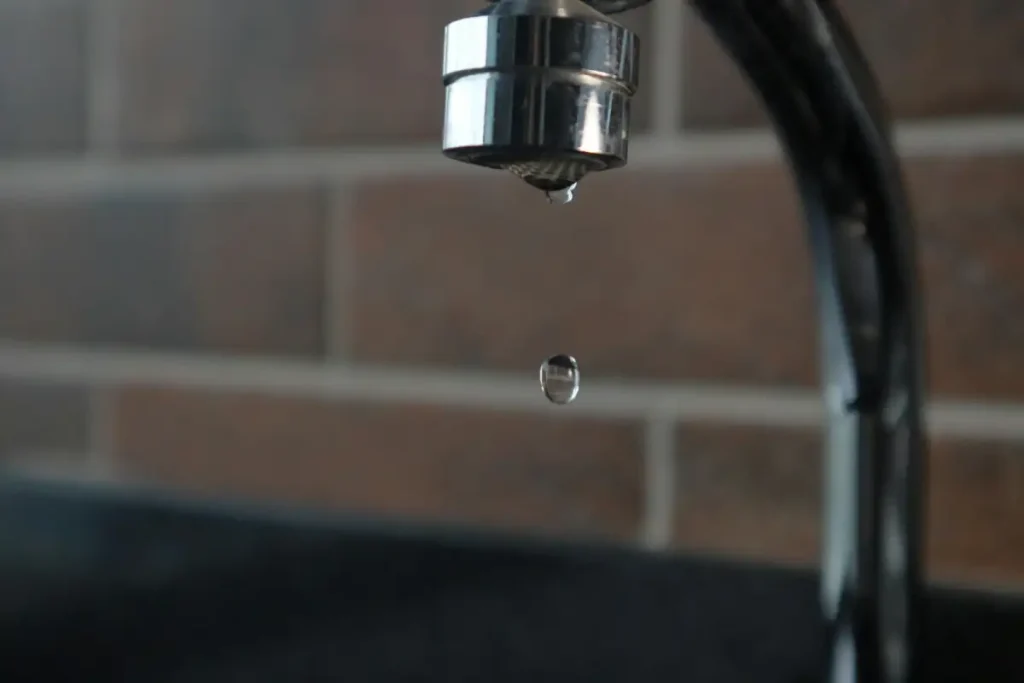
| Leak location | Likely cause |
|---|---|
| Drips from the spout | Worn washer, seal, cartridge or valve seat |
| Water around the handle | Worn O-ring or packing |
| Water pooling around the base | Worn O-rings in the spout or base (common on kitchen faucets) |
| Water under the sink | Loose or failing supply line or connection |
Know your faucet type
| Type | How to recognize it | Usual fix |
|---|---|---|
| Compression | Two handles that you tighten to close; feels squishy | Replace the rubber washer and maybe the seat |
| Cartridge | One or two handles, smooth movement | Replace the cartridge |
| Ball | Single handle over a rounded cap, common in kitchens | Replace seals, springs and O-rings with a repair kit |
| Ceramic disc | Single lever over a wide cylinder body | Replace the disc cartridge or seals |
How to fix a dripping faucet
- Shut off the water using the valves under the sink. No valves? Turn off the main water supply.
- Plug the drain with a rag or stopper so small parts cannot fall in.
- Remove the handle. Pry off the decorative cap and loosen the screw underneath.
- Take out the worn part: the washer and stem on a compression faucet, the cartridge, or the ball and seals.
- Take the old part to the hardware store to match it exactly, or order the maker’s repair kit using the model number.
- Install the new part, reassemble, turn the water back on slowly and test for drips.
Shop faucet repair kits on Amazon → (Match your faucet brand and model. As an Amazon Associate, HomePilot earns from qualifying purchases.)
Repair or replace?
- Repair when the faucet is in good shape and parts are available; most fixes take under an hour.
- Replace when the body is corroded, parts are hard to find, it keeps leaking after repairs, or you want a WaterSense-labeled model that uses less water.
- Call a plumber if the shutoff valves do not work, corroded parts will not come apart, or the leak is inside the wall.
Outdoor faucets in winter
Outdoor faucets, or hose bibs, are a special case. A drip outside is easy to miss, and in winter a faucet that was not drained can freeze, split and leak when it thaws, sometimes inside the wall. Before the first hard freeze, disconnect hoses, shut off the indoor valve that feeds the outdoor faucet if you have one, and open the outdoor tap to drain it. Frost-free sillcocks help, but only when hoses are disconnected. See our guide to preventing frozen pipes.
Fix a Leak Week
Every March, the EPA’s WaterSense program runs Fix a Leak Week to remind homeowners to check faucets, toilets, showerheads and irrigation systems. It is a good annual reminder, but there is no need to wait: most faucet leaks are cheaper to fix today than to pay for all year.
Do not forget the shower
Showerheads and tub spouts drip too. The EPA says a showerhead leaking at 10 drips per minute wastes more than 500 gallons a year. Often the fix is a new washer or tightening the connection with plumber’s tape. A dripping tub spout usually means a worn cartridge in the shower valve.
Catch leaks you cannot see
- Check your water meter with all water off; see how to test for leaks.
- Do a dye test for silent toilet leaks.
- Add a water leak sensor under sinks and near the water heater.
Frequently asked questions
How much water does a dripping faucet waste?
The EPA says a faucet dripping once per second wastes more than 3,000 gallons a year, enough for more than 180 showers.
How much does a leaky faucet cost per year?
For a drip of one per second, roughly $30 in water at $10 per 1,000 gallons, plus about $90 in energy if it is hot water from an electric heater. Your rates may differ.
What causes a faucet to drip?
Usually a worn rubber washer, O-ring, seal or cartridge inside the faucet. Mineral buildup and a worn valve seat can also cause drips.
Can I fix a leaky faucet myself?
Usually, yes. Most repairs mean shutting off the water, removing the handle and replacing an inexpensive part. Knowing your faucet type helps you buy the right part.
Why does my faucet still drip after replacing the washer?
The valve seat may be worn, or the faucet may need a new cartridge or full repair kit. If repairs do not stop it, replacing the faucet may be the better option.

