

Last updated November 24, 2026. Reviewed by the HomePilot editorial team.
Fix It · Plumbing
A weak shower is one of the most annoying home problems, because it makes a simple daily routine feel like a chore. The cause can be as small as a clogged screen in one faucet or as big as a problem with the water supply to your whole street. The trick is to work out which one you have. Plumbing guides agree on the starting point: is the low pressure at one fixture, or all through the house? Once you know that, most causes are quick to check and many are free to fix. Here is how to find yours, in the order that saves the most time.
By the HomePilot Team · Updated November 20, 2026 · Based on guidance from plumbing and home-repair experts, including This Old House and Bob Vila · How we research
Quick fix
If only one faucet or shower is weak, unscrew the aerator or showerhead and soak it in white vinegar for several hours to dissolve mineral buildup. If the whole house is weak, check that your main shutoff valve and the valve at the water meter are fully open, since a partly closed valve is a common and free-to-fix cause. Then screw a cheap pressure gauge onto an outdoor hose spigot: a normal reading is roughly 40 to 60 psi.
One fixture or the whole house?
| What you notice | Likely cause | What to do |
|---|---|---|
| One faucet or showerhead is weak | Clogged aerator or showerhead from mineral buildup | Clean or replace it |
| One fixture is weak, others are fine | Partly closed supply stop valve or a kinked supply hose under the sink | Open the stop valve; straighten the hose |
| Weak everywhere, sudden change | Main shutoff or meter valve partly closed, or a leak | Check the valves; test for a leak |
| Weak everywhere, always been this way | Municipal supply, pipe size or old, corroded pipes | Test the pressure; ask the utility or a plumber |
| Pressure swings or starts strong then fades | Failing pressure regulator | Have the regulator tested |
| Only hot water is weak | Problem between the water heater and the fixture | Check the heater valve; see the water heater guide |
| Weak when several things run at once | Demand exceeds supply or narrow pipes | Run fewer fixtures; ask a plumber about options |
Step-by-step: find the cause
- Compare fixtures. Turn on the kitchen, bathroom and outdoor taps in turn. Whole-house problems usually point to the main supply, valves or the pressure regulator, while a single weak fixture is more often a clogged fixture or local buildup.
- Clean the aerators and showerheads. Unscrew the aerator from the faucet tip, or the showerhead from its arm. Mineral flakes, sand and rust collect there. Soak the parts in white vinegar for several hours or overnight, brush them off and reinstall.
- Check the supply stop valves. Under each sink, make sure the small oval-handled valves are fully open, and look for kinked or crushed supply hoses.
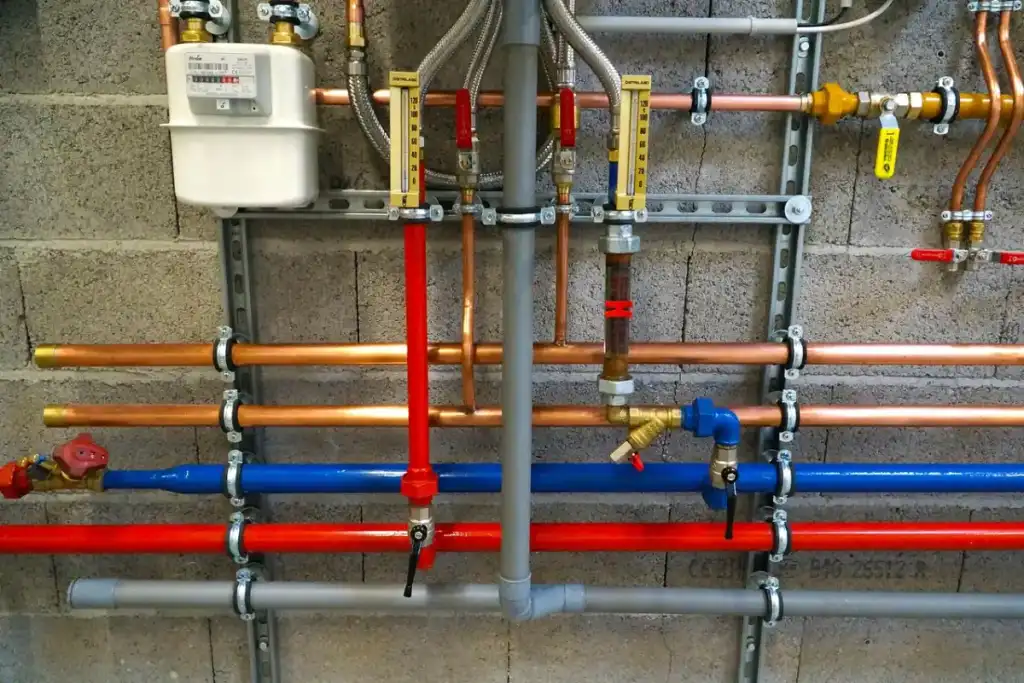
- Open the main valves all the way. Find the main shutoff valve where the water line enters the house and the valve at the water meter. If either was partly closed after plumbing work, opening it can restore full pressure.
- Test the pressure with a gauge. Screw an inexpensive pressure gauge onto an outdoor hose spigot, turn the spigot on fully and read it. A reading in the 40 to 60 psi range is generally considered normal for a home.
- Look for a leak. Turn off all water in the house and watch your water meter. If it keeps moving, water is escaping somewhere. See how to test for a leak with your meter.
- Check for a pressure regulator. Homes in areas with high supply pressure often have a bell-shaped regulator near the main shutoff. If you have one and the gauge reads low, it may have failed or be set too low.
- Ask the neighbors and the utility. If neighbors have weak pressure too, or the problem started suddenly, the supply may be the problem. The water utility can check.
Shop water pressure gauges on Amazon → · Shop faucet aerators → (As an Amazon Associate, HomePilot earns from qualifying purchases.)
The causes, explained
Mineral buildup (the most common cause)
Plumbers quoted by Bob Vila say buildup is the most common cause of low water pressure in most homes, especially where hard water is common. Minerals clog the tiny holes in showerheads and the screens in faucets first, and can narrow pipes over time. A water softener can reduce the problem at its source in hard-water areas.
A valve that is not fully open
The main shutoff valve and the water meter valve both need to be fully open for full flow. If the valve was partly closed after repairs or a past shutoff, the pressure drops across the whole house. Opening it all the way is a free fix.
A failing pressure regulator
Many homes in high-pressure areas have a pressure regulator installed just after the main shutoff, to protect the pipes. When it starts to fail, you may notice consistently low pressure throughout the house, sudden swings, or pressure that starts strong and then drops off. If your gauge reads low and the valves are open, the regulator is a prime suspect. Some regulators can be adjusted, but make small changes and recheck with the gauge, and do not exceed about 60 psi. Most people leave regulator work to a plumber.
A leak
A leak in a supply line can lower pressure because water escapes before it reaches your fixtures. A main line leak can also cause structural damage, mold and a big water bill if it goes unfixed. A meter that moves when everything is off is the telltale sign. Read about the cost of a leaky faucet and our guide to leak sensors.
Old, corroded or narrow pipes
Older galvanized or heavily corroded pipes can be partly blocked from the inside by rust and scale. If pipes are near the end of their life, a plumber may recommend replacing the water lines before they start to leak. This is a bigger job, so get a few quotes.
The water supply itself
Sometimes the problem is not in your house. Municipal supply problems, high demand at peak times, or sharing a supply pipe with several homes can all reduce the pressure that reaches you. If neighbors have the same problem, call your water utility. A plumber can also install a booster pump if your supply pressure is chronically low.
Call a plumber if
- Your gauge reads well under 40 psi and the valves are fully open.
- The pressure swings up and down, or you hear banging pipes; see water hammer.
- Your meter moves with all water off, or you see damp spots, stains or mold.
- You have old galvanized or corroded pipes.
- You are unsure about touching the regulator or main valve.
Low pressure in winter?
If pressure drops suddenly in a cold snap, a frozen or partly frozen pipe may be the cause, especially if one tap is affected. Do not ignore it: a partly frozen pipe can burst when it thaws. Open the affected tap, warm the pipe gently and read our guide to preventing frozen pipes.
Keep the pressure strong
- Clean aerators and showerheads every few months, more often in hard-water areas.
- Leave the main valves fully open.
- Fix leaks early.
- Flush the water heater to clear sediment; see how to flush your water heater.
- Check pressure once a year with a gauge, and keep it below about 60 psi.
- Consider a water softener if you have hard water.
Frequently asked questions
Why is my water pressure suddenly low?
Common causes include a clogged aerator or showerhead, a partly closed main or meter valve, a leak, a failing pressure regulator or a problem with the municipal supply. A sudden whole-house drop is worth checking against your water meter and neighbors.
What is normal water pressure for a house?
A reading in the range of about 40 to 60 psi on a gauge is generally considered normal for a home.
How do I test my water pressure?
Screw an inexpensive pressure gauge onto an outdoor hose spigot, turn the spigot on fully and read the dial.
How do I clean a clogged showerhead or faucet aerator?
Unscrew it, soak it in white vinegar for several hours or overnight to dissolve mineral deposits, brush off any residue and reinstall it.
Can a leak cause low water pressure?
Yes. A leak in a supply line lets water escape before it reaches your fixtures. Turn off all water and check whether your meter keeps moving.

