
The number on an EV charger tells you only half the story. Plug a car into a 22 kW wallbox and it may still charge at 7 kW, because the car itself decides how much power it accepts. This EV charging time calculator accounts for that. Pick your type of car and your charger, set your battery level, and it estimates how long the charge takes, how much range you add, and what it costs, either at your home electricity rate or at the price a public charging station asks.
Free, no signup, and it works for home charging and public fast chargers in the U.S., UK, Europe and Asia-Pacific.
Adjust your car’s specs (optional)
Find these in your owner’s manual or spec sheet. Use 0 for DC fast charging if your car doesn’t support it.
Shown on the charger screen or in the network’s app. Uses the currency of the region you pick below.
Rates based on the latest published averages (2025–2026). Enter your exact utility rate for 100% precision.
How long does it take to charge an electric car?
It depends mostly on the charger level. The U.S. Department of Energy’s fueleconomy.gov gives these typical figures for range added:
| Charger | Power | Range added | Typical full charge |
|---|---|---|---|
| Level 1 (120 V wall outlet) | About 1.2–1.4 kW | About 5 miles per hour | Around 30 hours or more |
| Level 2 (240 V home or public charger) | 3.8–19.2 kW | About 25 miles per hour on average (a few miles up to around 40) | About 4–7 hours |
| DC fast charging | 50–350 kW | 100–200+ miles in 30 minutes | About 80% in 20–30 minutes |
Here is what the calculator estimates for each type of car on common chargers. Home charging runs from 20% to 80% and fast charging from 10% to 80%, the way most drivers use them day to day.
| Car type (typical usable battery) | Level 1, 120 V | Level 2, 32 A (7.7 kW) | Level 2, 48 A (11.5 kW) | DC fast, 150 kW |
|---|---|---|---|---|
| Plug-in hybrid (15 kWh) | 8 h | 2 h 43 min | 2 h 43 min | Not supported on most |
| Small or city EV (40 kWh) | 21 h 26 min | 3 h 50 min | 3 h 50 min | 54 min |
| Mid-size sedan or crossover (65 kWh) | 34 h 49 min | 5 h 49 min | 4 h 5 min | 29 min |
| Long-range sedan or SUV (82 kWh) | 43 h 56 min | 7 h 21 min | 4 h 55 min | 29 min |
| Electric pickup or large SUV (120 kWh) | 64 h 17 min | 10 h 45 min | 7 h 12 min | 54 min |
Notice that the plug-in hybrid and the small EV charge no faster on the 48 A charger than on the 32 A one. That is the onboard charger at work.
Why your car, not the charger, often sets the speed
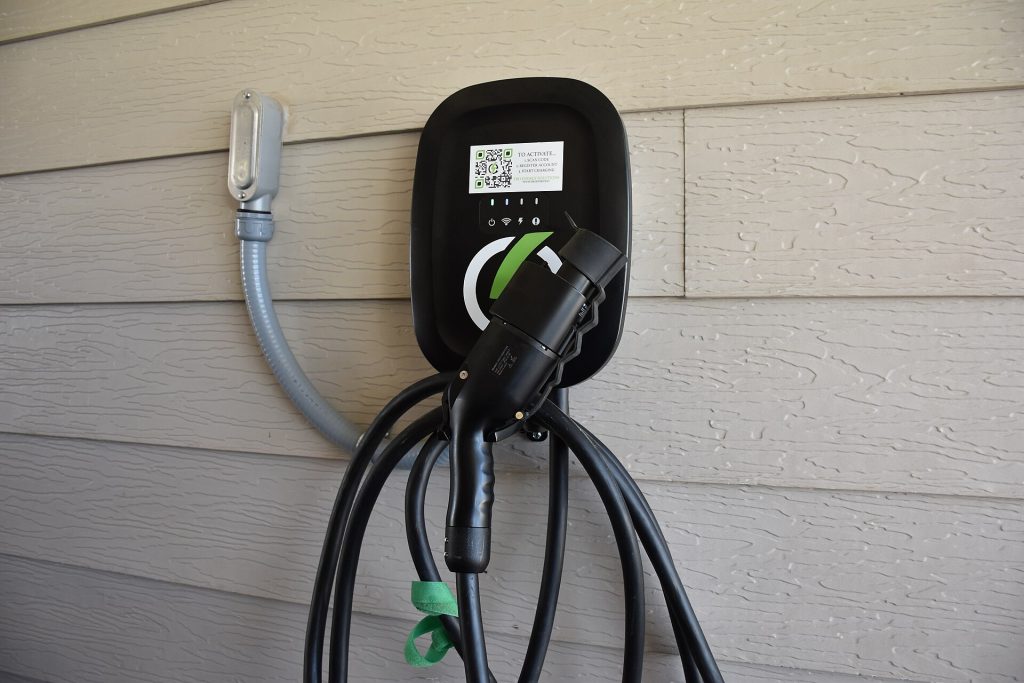
Home and Level 2 chargers supply AC power, and a part inside the car called the onboard charger converts it into DC for the battery. According to EnergySage, your car’s onboard charger limits how fast it can accept power, regardless of how powerful your home charger is.
- Older EVs and many plug-in hybrids accept only 16 A, or 3.8 kW. The 2011 Nissan Leaf took just 3.3 kW, Cars.com notes.
- Many longer-range EVs use a 7.2 kW onboard charger, and newer models are pushing past 10 kW. Cars.com lists the Ford Mustang Mach-E at 10.5 kW and the Volkswagen ID.4 at 11 kW.
- Most sedans and crossovers max out at 48 A (11.5 kW) on home charging, says EnergySage. Only a few large trucks, SUVs and luxury sedans, such as the Ford F-150 Lightning, Rivian R1S and Lucid Air, can use 80 A (19.2 kW), the top of the Level 2 standard.
So before paying for a bigger home charger, check your car’s maximum AC charging rate in the owner’s manual. If it is 7.2 kW, a 32 A charger already gives you nearly full speed.
| Level 2 charger | Power at 240 V | Breaker needed |
|---|---|---|
| 16 A | 3.8 kW | 20 A |
| 32 A | 7.7 kW | 40 A |
| 40 A | 9.6 kW | 50 A |
| 48 A | 11.5 kW | 60 A (hardwired) |
Source: EnergySage.
Why fast charging slows down after 80%
On a DC fast charger, the car controls the speed and changes it as the battery fills. EVgo explains that most EVs slow the charge rate as the battery approaches full to protect it, typically around 80%, and some vehicles drop to Level 2 speeds as early as 60–75%. ChargePoint adds that fast-charging speed depends on your car, the power available at the station and the temperature.
That is why the calculator shows how much time you would save by stopping at 80%. On a road trip, two short stops from 10% to 80% are usually quicker than one long stop to 100%.
Some energy is lost while charging
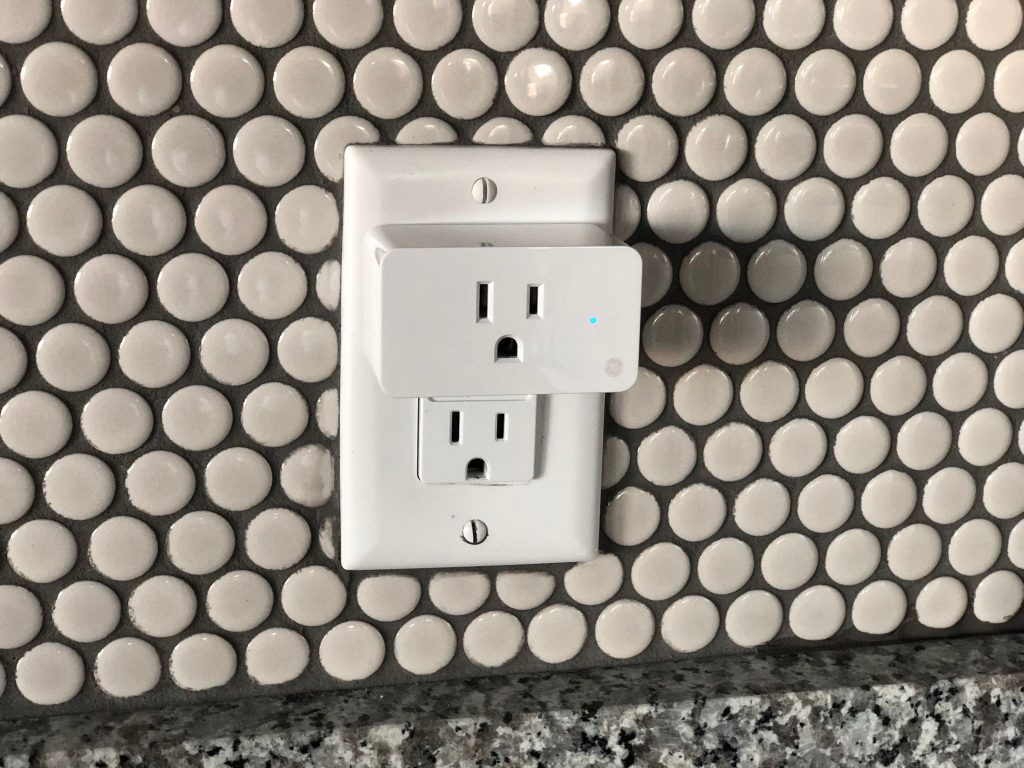
Not every kWh you pay for ends up in the battery. Some is lost as heat in the charger, cables and battery. Tests collected by InsideEVs found:
| Charging method | Energy lost | Test |
|---|---|---|
| Household socket | About 24% | ADAC, Renault Zoe |
| Level 2 wall charger | About 10% to 20% | ADAC (Renault Zoe, BMW iX) and Tesla’s EPA filing (Model Y, 14%) |
| DC fast charging | Roughly 10% | Estimate from a Tesla Model 3 session; less test data available |
The calculator uses 20% for wall outlets, 13% for Level 2 and wallboxes, and 10% for DC fast charging. Losses make charging slower and are why the cost estimate is based on the energy drawn from the wall, not just the energy that reaches the battery.
How this calculator works
- Energy needed: battery size times the percentage you add. Taking a 65 kWh battery from 20% to 80% adds 39 kWh.
- Home and Level 2 charging: the speed is the lower of the charger’s power and the car’s maximum AC rate, minus charging losses. 39 kWh on a 7.7 kW charger at 87% efficiency takes about 5 hours 49 minutes.
- DC fast charging: the calculator follows a typical charging curve: close to the car’s peak speed below 50%, about half that between 50% and 80%, and much slower above 80%. With modern fast-charging cars, this gives the 20–30 minutes to 80% that the U.S. Department of Energy quotes.
- Range and cost: energy into the battery times your car’s efficiency gives range added; energy drawn from the wall times your rate gives cost.
The car types use typical values. For an exact figure, open “Adjust your car’s specs” and enter your car’s usable battery size and maximum charging rates from the owner’s manual. Cold weather also slows charging, so expect longer times in winter.
Frequently asked questions
How long does it take to charge an electric car at home?
On a Level 2 charger, a full charge takes about 4 to 7 hours according to the U.S. Department of Energy, so most cars are full by morning. A standard 120 V outlet is far slower, adding about 5 miles of range per hour, which suits plug-in hybrids and short daily commutes.
Will a bigger home charger charge my car faster?
Only up to your car’s onboard charger limit. A car that accepts 7.2 kW charges at about the same speed on a 7.7 kW charger as on an 11.5 kW one. Check the maximum AC charging rate in your manual before upgrading.
How long does a DC fast charger take?
The U.S. Department of Energy says about 20 to 30 minutes to reach 80% for a typical modern EV. Cars with smaller batteries or a lower peak charging speed take longer, sometimes close to an hour, and the last 20% always takes a disproportionate amount of time.
Should I charge my EV to 100%?
Most manufacturers recommend charging to about 80% for everyday driving, according to EnergySage, and saving 100% for long trips. Many cars let you set a charge limit in the app. Always follow the guidance in your own owner’s manual, since some battery types are designed to be charged to 100% regularly.
Why does my car charge more slowly in winter?
Charging speed depends on the battery’s state of charge and the outside temperature, fueleconomy.gov notes. A cold battery accepts power more slowly, especially on fast chargers. If your car can precondition its battery, turn that on while driving to the charger.
Keep going: see how much it costs to charge an electric car at home, learn how to set your charger to use cheaper off-peak power, or browse every free calculator on the Tools page.
Sources: U.S. Department of Energy (energy.gov and fueleconomy.gov), EnergySage (Level 2 amperage and onboard charger limits), Cars.com (onboard charger sizes), EVgo and ChargePoint (fast-charging slowdown), InsideEVs and ADAC (charging losses). Electricity rates: EIA, ElectricChoice.com, Eurostat, Ofgem, SP Group, PLN and GlobalPetrolPrices. Charging times are estimates based on typical behavior. Last updated: November 2026.